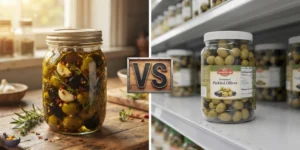
If you’ve ever stood in a grocery aisle holding two jars of pickle — one labeled “homemade style” and the other mass-produced — you’ve probably wondered which one actually deserves a spot on your dinner table. That’s exactly where the debate of Garlic Pickle vs Store-Bought Alternatives comes in. Both promise bold flavor and that satisfying tangy kick, but when it comes to nutrition, gut health, and long-term wellness, the differences are far from superficial.
In this guide, we’re breaking down everything — from fermentation science to sodium content — so you can finally decide which jar deserves a permanent place in your kitchen.
🧄 What Makes Garlic Pickle So Special?
Garlic has been celebrated for centuries, not just as a flavor booster but as a genuine health ally. When it’s turned into pickle — especially through traditional, slow fermentation — it becomes even more powerful.
Nutritional Profile of Garlic Pickle
A well-made garlic achar typically contains:
- Raw garlic cloves rich in sulfur compounds
- Natural oils (mustard oil or vinegar as a base)
- Spices like red chili, turmeric, and fenugreek
- Minimal or no artificial preservatives (in authentic homemade versions)
Allicin and Its Health Benefits
The real magic ingredient in garlic is allicin — a compound released when garlic is crushed or chopped. Allicin benefits include:
- Supporting cardiovascular health
- Acting as a natural antimicrobial agent
- Boosting the immune system
- Reducing inflammation over time
The catch? Allicin is sensitive to heat and processing. This is exactly why raw garlic health benefits are often diminished in heavily processed, factory-made pickles that go through pasteurization or long shelf-stabilization processes.
If you want to understand this in more depth, our detailed breakdown on garlic pickle health benefits covers the science in a much more comprehensive way.
⚖️ Garlic Pickle vs Store-Bought Pickle: The Real Difference
This is where things get interesting. Not all pickles are created equal, and the manufacturing process makes a massive difference in the final product.
Preservatives in Store-Bought Food
Mass-produced pickles are built for shelf stability, not necessarily nutrition. To survive months (sometimes years) on a supermarket shelf, manufacturers often rely on:
- Sodium benzoate and other chemical preservatives
- Artificial coloring agents
- Excess refined oil
- Stabilizers to maintain texture
These artificial additives extend shelf life but can quietly work against your gut health and overall wellness goals.
Sodium Content in Pickles — The Hidden Concern
Here’s a fact that surprises most people: sodium content in pickles is often where store-bought versions go overboard. Commercial pickles frequently use excess salt not just for flavor but as a cheap preservation method.
| Factor | Garlic Pickle (Homemade/Authentic) | Store-Bought Pickle |
|---|---|---|
| Sodium Level | Moderate, controlled | Often very high |
| Preservatives | Minimal to none | Chemical-based |
| Fermentation | Natural | Often skipped |
| Oil Quality | Traditional (mustard/vinegar) | Refined, processed |
| Probiotic Content | Higher (if fermented) | Usually low or none |
🏠 Homemade Garlic Pickle Benefits You Can’t Ignore
When garlic pickle is made the traditional way — through slow fermentation and natural preservation — it brings advantages that packaged versions simply can’t match.
- Higher probiotic content — Fermented garlic naturally cultivates beneficial bacteria
- Better nutrient retention — Less heat processing means more allicin survives
- No hidden chemicals — You control exactly what goes into the jar
- Stronger immune support — Raw garlic compounds remain more active
- Customizable spice and salt levels — Perfect for people managing blood pressure
If you’re curious about the fermentation process itself, our guide on why vinegar is used for pickling explains how different preservation methods affect the final nutritional outcome.
⚠️ Store-Bought Pickle Health Risks You Should Know
Convenience always comes with a trade-off. Here’s what you’re potentially sacrificing when you grab a mass-market jar:
- Excess sodium that strains the cardiovascular system over time
- Chemical preservatives linked to digestive discomfort in sensitive individuals
- Reduced probiotic activity due to pasteurization
- Refined, low-quality oils that offer little nutritional value
- Artificial flavor enhancers that mask the absence of real spice depth
None of this means store-bought pickles are inherently “bad” — but it does mean is garlic pickle healthy depends heavily on how and where it’s made.
🔬 Fermentation vs Vinegar-Based Pickles: Which Is Better?
This is a nuanced topic that often gets oversimplified. Both fermentation and vinegar-based preservation have their place.
Fermented Garlic
- Relies on natural bacteria to break down sugars
- Produces live probiotics that support gut health and fermented foods research
- Develops deeper, more complex flavor over time
Vinegar-Based Pickles
- Faster to produce
- Longer shelf stability
- Fewer live probiotics, but still retains antioxidant properties from garlic and spices
Both methods are valid food preservation methods, but if gut health is your priority, naturally fermented garlic pickle tends to have the upper hand.
🤔 Is Garlic Pickle Healthy? Separating Fact from Fiction
Short answer: yes — when made right. Garlic pickle, especially the authentic, slow-prepared kind, offers legitimate garlic pickle health benefits:
- Supports digestion through natural enzymes
- Provides antioxidants in garlic that combat oxidative stress
- Contributes to immune system boosting foods category
- Adds flavor without relying on unhealthy additives
The myth that “all pickles are unhealthy” usually comes from judging homemade achar by store-bought standards. For a deeper dive into this exact question, check out our dedicated piece: Is Achar Good or Bad for Health?
🆚 Natural Pickle vs Processed Pickle: A Side-by-Side Comparison
Let’s simplify this with a direct comparison table so you can see exactly where each option stands.
| Category | Natural/Homemade Pickle | Processed/Commercial Pickle |
|---|---|---|
| Ingredients | Whole, recognizable | Often includes additives |
| Preservation | Fermentation/natural oils | Chemical preservatives |
| Nutrient Density | High | Variable, often lower |
| Taste Authenticity | Traditional, rich flavor | Standardized, mass-market |
| Health Impact | Generally positive | Depends on brand quality |
The takeaway? Natural pickle vs processed pickle isn’t about demonizing convenience — it’s about knowing what you’re actually consuming.
🇵🇰 Garlic Achar vs Market Achar: What Pakistani Consumers Should Know
In Pakistan, achar culture runs deep — but not all market achar is created with the same care as homemade recipes passed down through generations.
Many commercial brands prioritize cost-cutting over quality, which often means:
- Lower-grade oil
- Reduced garlic content (bulked up with fillers)
- Heavy reliance on preservatives for extended shelf life
If you’re searching for garlic achar vs market achar that doesn’t compromise on authenticity, exploring a trusted, small-batch source makes a real difference. Our Best Garlic Pickle in Pakistan Buyers Guide walks you through exactly what separates premium garlic achar from mass-produced alternatives.
✅ How to Choose the Healthiest Pickle Option
Not sure how to pick the right jar? Here’s a practical checklist:
- Check the ingredient list — fewer, recognizable ingredients are a good sign
- Look for natural preservation methods — fermentation or vinegar over chemical stabilizers
- Verify sodium content — moderate salt is fine, excessive salt is a red flag
- Choose trusted, authentic brands — small-batch producers often retain traditional methods
- Prioritize real garlic content — not fillers disguised as “garlic flavor”
If you want to skip the guesswork entirely, you can explore our Garlic Pickle collection, made using traditional preparation methods without compromising on authenticity.
🕐 Shelf Life: Homemade vs Packaged Pickle
One common concern people raise is longevity. Here’s the honest comparison:
- Homemade garlic pickle: Shorter shelf life (a few months) but higher nutrient and probiotic retention
- Store-bought pickle: Extended shelf life (sometimes years) due to preservatives, but often at the cost of nutritional quality
For practical storage tips that help you maximize freshness without relying on artificial preservatives, our guide on how to store achar for maximum freshness is worth bookmarking.
🏆 Final Verdict: Which One Should You Choose?
When comparing Garlic Pickle vs Store-Bought Alternatives, the verdict leans clearly toward authentic, traditionally made garlic pickle — as long as it’s sourced from a brand that prioritizes quality over shortcuts. The nutritional edge, probiotic content, and absence of unnecessary chemicals make it the smarter long-term choice for anyone serious about their health.
Store-bought options aren’t inherently villains, but they require careful label-reading and brand research before they earn a spot in your pantry.
📝 Conclusion
At the end of the day, the garlic pickle vs store-bought pickle debate isn’t about convenience versus tradition — it’s about informed choice. Authentic garlic achar, made with real ingredients and time-honored preservation methods, consistently outperforms mass-produced alternatives in nutritional value, gut health benefits, and overall wellness impact.
If you’re ready to experience the difference for yourself, it’s time to taste what authentic really means.
👉 Call to Action
Craving the real deal? Explore Achar Mart’s handcrafted Garlic Pickle — made the traditional way, with no shortcuts and no compromises. Browse our full pickle collection and taste the difference authentic achar makes.
❓ Frequently Asked Questions
Q1: Is garlic pickle healthy to eat daily? In moderate amounts, yes. Authentic garlic pickle offers digestive and immune benefits, but portion control matters due to sodium and oil content.
Q2: What’s the main difference between garlic pickle and store-bought pickle? The biggest difference lies in preservation methods — homemade garlic pickle typically relies on natural fermentation, while store-bought versions often use chemical preservatives for extended shelf life.
Q3: Does store-bought pickle have probiotics? Most commercial pickles undergo pasteurization, which significantly reduces or eliminates live probiotics compared to naturally fermented versions.
Q4: How long does homemade garlic pickle last? When stored properly in a cool, dry place with adequate oil coverage, homemade garlic pickle can last several months without artificial preservatives.
Q5: Which is the healthiest pickle option overall? Naturally fermented, small-batch garlic pickle made with quality ingredients and minimal processing is generally considered the healthiest option.