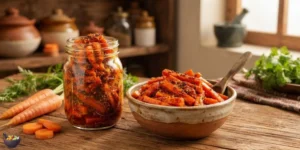
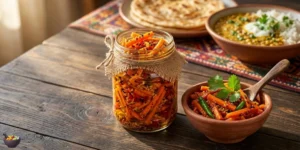
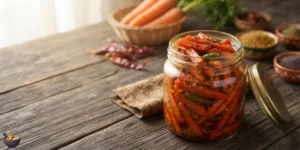
If you have ever opened a jar of homemade achar and instantly craved a plate of daal chawal or paratha, you already understand the magic of a good carrot pickle recipe. Carrot pickle, known across Pakistani households as Gajar Ka Achar, is one of those timeless condiments that turns even the simplest meal into something special. It is spicy, tangy, slightly crunchy, and packed with the kind of bold flavor that only traditional desi spices can deliver.
In this guide, we will walk you through exactly how carrot pickle is made, step by step, using the same traditional Pakistani method that has been passed down through generations. Whether you are pickling for the first time or looking to perfect your family recipe, this article covers everything — ingredients, spices, preparation, sun-drying, storage, and pro tips for getting that authentic desi taste every single time.
🥕 What Makes Pakistani Carrot Pickle So Special?
Pakistani carrot pickle isn’t just a side dish — it’s a cultural staple. Every region, and honestly every household, has its own twist on the recipe, but the foundation remains the same: fresh carrots, bold spices, and a preservation method that has stood the test of time.
What sets traditional Pakistani carrot pickle apart from other pickled vegetables is the combination of mustard oil, whole spices, and a slow sun-drying process that intensifies the flavor while extending shelf life. This isn’t a quick 24-hour pickle — it’s a labor of love that typically takes several days to mature fully.
If you’re curious about how this tradition evolved, it’s worth exploring the rich history of achar in Pakistani cuisine, which traces back centuries to preservation techniques used long before refrigeration existed.
💪 Health Benefits of Homemade Carrot Achar
Beyond the flavor, homemade carrot pickle brings genuine nutritional value to the table:
- Rich in fiber – Carrots retain much of their fiber content even after pickling, supporting digestion.
- Probiotic potential – The natural fermentation process can introduce beneficial bacteria, similar to other fermented foods.
- Antioxidant boost – Turmeric and mustard seeds used in the spice mix carry anti-inflammatory properties.
- Better digestion – Fenugreek and nigella seeds are traditionally used in South Asian cooking to aid digestion.
Of course, moderation matters, especially with oil and salt content. If you’re wondering whether pickles fit into a healthy diet, we’ve covered this in detail in our article on whether achar is good or bad for health. You can also read more about the general benefits of pickling fruits and vegetables as a food preservation method.
🧂 Essential Ingredients for Carrot Pickle Recipe
Before you start, gather these ingredients. A good carrot achar recipe relies on freshness and the right spice balance more than anything else.
Main Ingredients
- Fresh, firm carrots (preferably winter carrots — they’re crunchier and sweeter)
- Mustard oil (the traditional choice for Pakistani pickles)
- White vinegar
- Salt (rock salt or regular, as per preference)
Spice Blend (Masala Mix)
- Mustard seeds (rai)
- Fenugreek seeds (methi)
- Nigella seeds (kalonji)
- Turmeric powder (haldi)
- Red chili powder
- Fennel seeds (optional, for added aroma)
- Garlic cloves (crushed, optional but common in Punjabi-style recipes)
This spice combination is what gives Pakistani achar its distinct, bold personality — very different from the milder pickled vegetables you’ll find in other cuisines.
👩🍳 Step-by-Step: How Carrot Pickle Is Made
Here’s the traditional process broken down into simple, manageable steps.
Step 1: Selecting and Preparing the Carrots
Choose fresh, firm carrots without soft spots. Wash thoroughly and pat completely dry — moisture is the enemy of any pickle, as it encourages unwanted mold. Cut the carrots into thin, uniform strips or rounds, depending on your preference.
Step 2: Preparing the Spice Mix
Dry roast the mustard seeds, fenugreek seeds, and fennel seeds lightly to release their aroma. Once cooled, coarsely grind them. Mix this with turmeric, red chili powder, nigella seeds, and salt to create your masala blend.
Step 3: Combining Carrots with Oil, Vinegar & Spices
Heat mustard oil until it reaches a light smoking point, then let it cool slightly. Pour it over the carrot strips along with the vinegar and prepared spice mix. Toss everything thoroughly so each piece is well coated.
Step 4: Sun-Drying — The Traditional Touch
This is where spicy carrot pickle gets its authentic character. Transfer the mixture into a clean, dry glass jar and place it in direct sunlight for 3 to 5 days, stirring once daily with a clean, dry spoon. The sun-drying process helps the flavors meld together while naturally reducing moisture content, which supports longer preservation.
Step 5: Fermentation and Maturing
After the initial sun-drying period, the pickle needs time to mature. Keep the jar in a cool, dry place for another few days to a week. You’ll notice the oil turning a deeper reddish hue and the carrots softening slightly while retaining their crunch — a sign that fermentation is doing its job.
Step 6: Storing in Jars
Once matured, transfer the pickle into a properly sealed glass jar. Make sure the carrots are fully submerged in oil, as this acts as a natural preservative barrier against air and bacteria.
For a deeper dive into extending shelf life correctly, check out our guide on how to store achar for maximum freshness and shelf life.
🌡️ Pro Tips for a Perfect Homemade Carrot Pickle Recipe
- Always use completely dry utensils and jars — even a small amount of water can spoil the entire batch.
- Adjust chili and salt levels gradually; you can always add more, but you can’t take it out.
- If sunlight isn’t available consistently, a warm, dry indoor spot works as an alternative, though it may take slightly longer.
- Mustard oil is preferred over other oils because of its pungent flavor and natural preservative qualities — learn more about why vinegar is used for pickling alongside oil in traditional recipes.
- Stir the pickle with a dry spoon regularly during the sun-drying phase to ensure even spice distribution.
If this is your first time making pickles at home, it’s worth reading our beginner-friendly piece on the reasons to start pickling at home — it covers the basics that apply to almost every desi pickle recipe, not just carrots.
🥒 Carrot Pickle vs Other Pakistani Pickles
Carrot pickle holds its own unique place among Pakistan’s diverse pickle culture. Compared to heavier options like mango or mixed pickle, carrot achar tends to be:
- Lighter in texture but equally bold in spice
- Faster to prepare than pickles requiring longer fermentation, like mixed vegetable achar
- More versatile as a side dish, pairing well with both light and heavy meals
If you enjoy exploring different pickle varieties, our detailed buyer’s guide to the best carrot pickle in Pakistan breaks down what to look for when buying instead of making your own.
🍽️ How to Serve Carrot Pickle — Best Pairing Ideas
A well-made homemade carrot pickle recipe isn’t just a side condiment — it elevates entire meals. Here’s how it’s traditionally enjoyed:
- Alongside daal chawal for a spicy contrast to the mellow lentils
- With parathas at breakfast for an extra kick
- Paired with biryani to cut through the richness
- As a companion to karahi and BBQ dishes for added tang
For more pairing inspiration, take a look at our roundup of the best Pakistani dishes to pair with achar.
🛒 Prefer It Ready-Made? Buy Authentic Carrot Pickle Online
Not everyone has the time (or patience) for a week-long pickling process — and that’s completely understandable. If you’d rather skip straight to enjoying that authentic, spicy, sun-dried flavor, Achar Mart makes it easy.
- Explore our Carrot Pickle collection made using the same traditional Pakistani method described above
- Order our best-selling Carrot Pickle product directly, prepared fresh and packed for maximum freshness
- Browse our full pickle shop for other traditional flavors
- Read our guide on buying pickles online in Pakistan for tips on choosing quality achar
❓ Frequently Asked Questions
1. How long does homemade carrot pickle take to be ready? Traditional Pakistani carrot pickle typically takes 5 to 10 days from preparation to full maturity, depending on sunlight availability and desired flavor intensity.
2. Can I make carrot pickle without sun-drying? Yes, though sun-drying is what gives it the authentic traditional taste and helps with preservation. Without it, the pickle may need refrigeration sooner and won’t develop the same depth of flavor.
3. What type of oil is best for carrot pickle? Mustard oil is the traditional and most preferred choice due to its strong flavor and natural preservative properties, though some recipes use vinegar as a lighter alternative.
4. How long does carrot pickle last once made? When stored properly in a sealed glass jar with oil fully covering the carrots, homemade carrot pickle can last 6 months to a year.
5. Is carrot pickle good for health? In moderation, yes. It offers fiber and antioxidants from the spices, though it should be consumed mindfully due to its oil and salt content.
6. Why do carrots turn slightly soft in pickle? This is a normal part of the fermentation process. The carrots absorb the spice mixture and soften slightly while still retaining a pleasant crunch.
✅ Final Thoughts
Making your own carrot pickle recipe at home is more than just following steps — it’s about connecting with a tradition that has flavored Pakistani kitchens for generations. From carefully selecting fresh carrots to patiently sun-drying the mixture, every stage adds character to the final jar of achar. Once you’ve tasted the difference between store-bought and truly homemade Gajar Ka Achar, there’s rarely any going back.
Of course, if time isn’t on your side, you don’t have to miss out on that authentic flavor. Order fresh, traditionally-made Carrot Pickle from Achar Mart today and bring the taste of real Pakistani achar straight to your table.