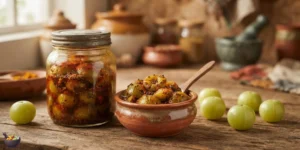
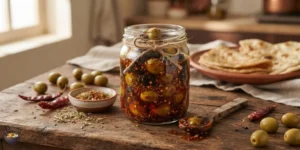
A spoonful of achar can make a plain meal taste like a feast. A bowl of daal-chawal, a hot paratha or a simple khichdi all come alive with that tangy, spicy bite.
But have you ever looked at the layer of oil floating on top of the jar and wondered what it means for your health? Understanding oil-based pickles fat content helps you enjoy your favourite achar without losing track of your daily fat intake.
The good news is that you don’t have to give up pickles. You just need to know how much fat is hiding in that jar, how it fits into your day, and how to eat achar the smart way. This guide covers all of it in simple, practical language.
Why Oil Is Used in Pickles in the First Place
Oil is not just there to make pickles taste rich. In traditional achar-making, oil does several important jobs:
- Preservation: A layer of oil keeps air away from the fruit or vegetable pieces, which helps slow spoilage.
- Flavour carrying: Spices like fennel, nigella, fenugreek and red chilli release their aroma best in oil.
- Texture: Oil keeps the pieces soft, glossy and well coated.
- Shelf life: Along with salt and spices, oil helps pickles last for months.
This is why traditional achar has always been oil-based in South Asian kitchens. If you’re curious about how this food tradition began, read our guide on the history of achar in Pakistani cuisine.
The trade-off is that oil is the most calorie-dense ingredient in the jar, and that is where the fat comes from.
Oil-Based Pickles Fat Content: The Basics
Let’s start with some simple numbers.
- One tablespoon of cooking oil (mustard, sesame, sunflower or canola) contains roughly 13 to 14 grams of fat and about 120 calories.
- Pickle oil is not pure oil on your plate. A spoonful of achar usually holds a mix of fruit or vegetable pieces, spices, salt and some oil.
- The final achar fat content depends on how oily the pickle is, how much you scoop, and whether you eat the oil or leave it in the jar.
A rough guide:
- A lightly oiled pickle may give you around 2 to 3 g of fat in a small spoonful.
- A traditional, oil-rich pickle can give you 5 to 8 g or more in the same spoonful if you scoop up plenty of oil.
These are approximate figures, not exact values. Every brand and every home recipe is different, so always check the nutrition label when one is available.
How Much Fat in Oil Pickles? A Quick Reference Table
Here is a simple estimate of what you might get from a typical serving of about one tablespoon (15 to 20 g) of oil-based achar.
| Pickle Type | Estimated Calories | Estimated Fat | Notes |
|---|---|---|---|
| Mango pickle (traditional) | 40–90 kcal | 3–8 g | Often oil-rich, with whole spices |
| Lime / lemon pickle | 25–60 kcal | 2–5 g | Often less oil than mango |
| Mixed pickle | 35–80 kcal | 3–7 g | Varies a lot by recipe |
| Garlic pickle | 40–90 kcal | 3–7 g | Garlic is dense, so a spoon holds more |
| Green chilli pickle | 30–70 kcal | 2–6 g | Depends on how much oil is added |
These are estimates only. Actual values vary by brand, recipe and how much oil you spoon out along with the pickle.
So when people ask, “how many calories are in a spoon of achar?”, the honest answer is somewhere between 30 and 90 calories, mostly from oil.
Mango Pickle Calories and Fat: The Most Popular Achar
Mango pickle is the star of almost every Pakistani dining table, so let’s look at it more closely.
Raw mango itself is low in fat and calories. The mango pickle calories and fat come mainly from:
- The oil used to marinate the pieces
- Any extra oil that settles at the top of the jar
- Spices ground with oil into a masala paste
A small portion is generally fine. The problem starts when achar becomes a side dish you eat by the spoonful, not a flavour accent.
If you enjoy mango achar, explore our best mango pickle buyer’s guide for Pakistan or browse the mango pickle collection to compare options. You can also see how it stacks up in our mango pickle vs lime pickle comparison.
What Does the Oil Type Mean for Your Health?
Not all pickle oils are the same. The type of oil changes the saturated fat, flavour and overall nutrition profile.
Mustard Oil Pickle
A mustard oil pickle is the classic choice for Punjabi and North Indian style achar. Mustard oil has a sharp, pungent flavour and is made up mostly of monounsaturated fat, with a smaller share of saturated fat. It also contains some omega-3 fat.
One thing to know: mustard oil contains erucic acid, and some countries regulate how it can be sold for food. If you have questions about it, speak to a doctor or dietitian, and buy from sellers who are transparent about their oil.
Sesame Oil Pickle
A sesame oil pickle has a nutty, mellow taste. Sesame oil contains a good mix of mono- and polyunsaturated fats and is widely used in traditional cooking.
Sunflower, Canola and Blended Oils
Many modern brands use refined oils such as sunflower or canola. These are lighter in flavour and usually lower in saturated fat, but they can be more processed.
The Takeaway
Every oil has about the same calories per tablespoon (roughly 120). What differs is the fat quality. That is why the healthiest oil for making pickles is usually one that is high in unsaturated fats, fresh and not reused or overheated. Whatever oil you choose, portion size still matters more than the oil type.
How Does Pickle Oil Count Toward Your Daily Fat Intake?
Yes, the oil in your achar counts. It is dietary fat, just like the oil in your curry or the ghee on your roti.
What Is a Healthy Daily Fat Intake?
According to general guidance from the World Health Organization, total fat should make up about 15% to 30% of your daily energy intake, and saturated fat should stay below 10%.
For a person eating around 2,000 calories a day, that works out to roughly:
- Total fat: about 45 to 65 grams
- Saturated fat: under about 22 grams
Your own needs depend on your age, activity level and health goals, so treat these as general reference points.
Where Pickles Fit In
If you eat one small spoon of achar a day, it might add 3 to 6 g of fat. That is about 5 to 10% of your daily fat budget. It’s small and easy to fit in.
If you eat three or four heavy spoonfuls with every meal, it can add up to 15 to 25 g or more, and that is a big chunk of your healthy fat intake per day.
Are Oil Pickles Bad for You?
This is one of the most common questions, and the honest answer is: it depends on how much you eat and who you are.
The Good Side
- Pickles add flavour, so you may feel satisfied with simpler, healthier meals.
- Ingredients like garlic, ginger and lime bring their own natural benefits.
- Spices such as fennel, turmeric and fenugreek have long been part of traditional food culture.
- A small portion fits into most balanced diets.
Learn more in our post on the top 6 health benefits of pickles and our balanced take on whether achar is good or bad for health.
The Watch-Outs
- High calories: Oil is calorie-dense.
- High sodium: Salt is another key preservative. A lot of sodium in pickles can matter if you’re managing blood pressure.
- Easy overeating: Achar tastes so good that a spoon becomes three.
In short, oil pickles are not “bad” or “good.” They are a calorie-dense food that works best in small amounts.
Oil Pickle Side Effects: What to Know
Eating too much oil-based achar regularly may lead to some issues. Here are the most common oil pickle side effects:
- Weight gain: Extra calories from oil can add up over time.
- Acidity and heartburn: Spicy, oily food can aggravate acid reflux in sensitive people.
- Water retention and bloating: High salt intake can cause this.
- Raised blood pressure: Too much sodium over time can be a concern for people with high blood pressure.
- Digestive discomfort: Heavy, oily food can feel uncomfortable on an empty stomach.
These effects are linked to overeating, not to eating pickles in sensible amounts.
Can Oil-Based Pickles Increase Cholesterol?
Pickles don’t contain cholesterol themselves, since cholesterol comes from animal products. What matters here is the type and amount of fat in your overall diet.
- Diets high in saturated fat and trans fat are linked to higher LDL (“bad”) cholesterol levels.
- Most good-quality pickle oils are mostly unsaturated. But if a pickle uses a hydrogenated or low-quality oil, it can add unwanted fats.
- Check the nutrition label and ingredients. Avoid products listing hydrogenated oils or “vanaspati.”
If you already have high cholesterol or a heart condition, talk to your doctor about how much achar is right for you.
Are Oil Pickles Bad for Heart Patients?
People with heart conditions should be more careful, mainly because of two things: fat and sodium.
Practical tips for heart health:
- Keep portions very small, such as half a teaspoon to one teaspoon.
- Choose pickles with less oil and drain the excess.
- Look for lower-sodium options.
- Balance your day with fruits, vegetables, whole grains and healthy fats like nuts.
Always follow your doctor’s or dietitian’s advice, since every patient’s needs are different.
Do Oil Pickles Cause Weight Gain? Is Pickle Healthy for Weight Loss?
A single spoon of achar will not make you gain weight. Weight gain comes from regularly eating more calories than you burn.
Here is the reality:
- One tablespoon of pickle oil is about 120 calories.
- If you eat extra oil-laden achar every day on top of your normal meals, those calories add up.
- Pickle is not a magic weight-loss food, but it’s also not a forbidden one.
So, is pickle healthy for weight loss? It can fit into a weight-loss plan if you keep portions small and pair it with healthy meals. Lighter, fermented vs oil-preserved pickles are worth comparing too. Fermented or vinegar-based options are often lower in calories. Read about why vinegar is used for pickling to see how it works.
Oil Pickles vs Vinegar Pickles: Nutrition Compared
| Feature | Oil-Based Pickles | Vinegar-Based Pickles |
|---|---|---|
| Calories | Higher | Lower |
| Fat | Moderate to high | Very low |
| Flavour | Rich, spicy, deep | Sharp, tangy, light |
| Shelf life | Long | Long |
| Best for | Occasional flavour boost | Everyday low-calorie option |
| Sodium | Can be high | Can be high |
Neither is “better” for everyone. If you’re watching fat, vinegar-based pickles are lighter. If you love the traditional taste, oil-based achar in small portions is perfectly fine.
How Much Pickle Is Safe to Eat Daily?
Is it safe to eat oil pickles every day? For most healthy adults, a small portion daily is generally fine.
A sensible guideline:
- Healthy adults: 1 to 2 teaspoons (about 10 to 15 g) per meal
- People watching weight: 1 teaspoon, with the oil mostly drained
- People with high blood pressure or heart issues: Ask your doctor, and keep it minimal
Think of achar as a condiment, not a side dish. Use it the way you’d use salt or chutney: a little goes a long way.
How to Reduce Fat Intake From Pickles
You don’t have to quit achar. Try these simple tricks:
- Scoop the pickle, not the oil. Use a dry spoon and let extra oil drip back into the jar.
- Blot on a paper towel if the pieces are very oily.
- Measure your portion. Use a teaspoon, not a big serving spoon.
- Pair it smartly. Eat it with plain daal, grilled meat or salad instead of with already-fried foods.
- Choose lighter pickles. Lemon, ginger and amla options are often less oily. See our post on the benefits of amla pickle.
- Go for variety. Try a mixed pickle in small amounts so you enjoy many flavours without overdoing one.
Low Oil Pickle Recipe: A Lighter Homemade Option
Making achar at home gives you full control over oil, salt and ingredients. Here is a simple low oil pickle recipe idea you can adapt.
Ingredients:
- 500 g raw mango or lemon, cut into pieces
- 2 tablespoons salt (adjust to taste)
- 1 tablespoon each fennel, nigella and fenugreek seeds, lightly crushed
- 1 teaspoon turmeric
- 1 to 2 teaspoons red chilli powder
- 3 to 4 tablespoons mustard or sesame oil (instead of the usual cupful)
- 1 to 2 tablespoons lemon juice or a splash of vinegar to help preserve
Method:
- Wash and dry the fruit completely, since moisture spoils pickle.
- Mix with salt and turmeric, and rest it for a few hours.
- Add the spices and mix well.
- Warm the oil gently, let it cool, then pour it over the mixture.
- Add lemon juice or vinegar to help with preservation.
- Store in a clean, dry jar and keep it in the fridge.
Important note: Lower oil means a shorter shelf life, so store it in the refrigerator and use it within a few weeks. For more ideas, try our spicy garlic pickle recipe or read 5 reasons to start pickling at home.
Proper storage matters too. See our guide on how to store achar for maximum freshness and shelf life.
Best Low-Fat Pickle Alternatives
If you want the tang without the extra oil, consider these:
- Vinegar-based pickles such as onions, carrots and cucumbers
- Fermented pickles made with salt brine
- Chutneys like mint, tamarind or coriander
- Fresh salads with lemon, chilli and chaat masala
- Lighter achar with less oil, such as carrot pickle or lime pickle
These give you the sour-spicy kick for far fewer calories.
How to Read a Pickle Nutrition Label
Next time you buy a jar, scan the label for these:
- Serving size: Is it 10 g, 15 g or 30 g? Compare fairly.
- Total fat and saturated fat per serving
- Sodium: Lower is better if you’re watching blood pressure
- Oil type: Prefer mustard, sesame, sunflower or olive. Avoid hydrogenated oils.
- Preservatives and colours: Fewer is better
If you want clean, honest ingredients, explore our organic achar options in Pakistan or authentic Pakistani achar.
Smart Ways to Enjoy Achar Daily
You don’t need to remove pickle from your meals. Just be mindful:
- Pair achar with balanced meals. Here are 10 Pakistani dishes that go perfectly with achar.
- Keep a small spoon for pickle only.
- Don’t eat pickles on an empty stomach.
- Drink enough water, because pickles are salty.
- Balance a pickle-heavy meal with lighter meals later in the day.
Frequently Asked Questions (FAQs)
How much fat is in one tablespoon of pickle oil?
One tablespoon of pickle oil contains about 13 to 14 grams of fat and roughly 120 calories, similar to regular cooking oil. A spoonful of actual achar contains less, usually about 2 to 8 grams, depending on how oily it is.
Can oil-based pickles increase cholesterol?
Pickles contain no dietary cholesterol, but a diet high in saturated or trans fat can raise LDL cholesterol. Eat small portions, choose pickles made with good-quality oils, and avoid hydrogenated fats.
Is it safe to eat oil pickles every day?
For most healthy adults, a small portion of one to two teaspoons a day is generally fine. People with high blood pressure, heart disease or digestive issues should check with their doctor first.
How many calories are in a spoon of achar?
A typical spoonful of oil-based achar has about 30 to 90 calories, depending on the type of pickle and how much oil comes with it.
Do oil pickles cause weight gain?
Only if they push your total calorie intake above what your body needs. Eaten in small amounts, pickles are unlikely to cause weight gain on their own.
What is the healthiest oil for making pickles?
Oils rich in unsaturated fats, such as mustard, sesame, olive or sunflower, are good options. Choose fresh, good-quality oil and avoid hydrogenated fats.
How to reduce fat intake from pickles?
Use a dry spoon, drain extra oil, measure your portion, choose lighter pickles and pair achar with healthy meals.
Oil pickles vs vinegar pickles: which has better nutrition?
Vinegar pickles are usually lower in fat and calories. Oil pickles are richer in flavour and calories, so portion control matters more.
Conclusion
Let’s bring it all together. The oil-based pickles fat content in your achar is real, but it’s manageable. Oil is calorie-dense, and a heavy hand with the spoon can quietly push up your daily fat intake. A small, mindful portion, though, fits easily into most healthy diets.
Key takeaways:
- One tablespoon of oil has about 13 to 14 g of fat and 120 calories.
- A small spoon of achar usually adds just 2 to 8 g of fat.
- Portion size matters more than the pickle type.
- Watch both fat and sodium, especially if you have heart or blood pressure concerns.
- Lighter, low-oil or vinegar-based pickles are great alternatives.
Achar is a beloved part of our food heritage, and you can keep enjoying it with a little awareness.
Ready to Enjoy Authentic Achar the Smart Way?
Explore our full range of handcrafted, authentic pickles at Achar Mart’s shop. You can also browse our premium desi pickles and order your favourite jar today. Prepared with care, delivered across Pakistan.
Disclaimer: This article is for general information only and is not medical advice. Nutritional values are approximate. Please consult a doctor or registered dietitian for personal health guidance.