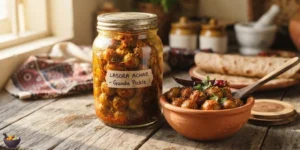
If you grew up in a Pakistani home, you know the feeling. A plate of hot parathas arrives at the table and your hand reaches for the pickle jar before anything else. But sometimes you want that bold achar flavor in a softer, spoonable, easier-to-eat form.
That is exactly where this achar chutney recipe comes in. It takes the sour, spicy punch of traditional pickle and blends it with the sweet-and-tangy character of a chutney. The result is a rich, glossy condiment that goes with almost everything: parathas, biryani, samosas, grilled sandwiches, even cheese toast.
In this guide, I’ll walk you through a homemade achar chutney you can make in about 30 minutes, with simple ingredients and no complicated steps. You’ll also learn how to store it, how to adjust the spice, and how to give it a modern fusion twist your family will not stop talking about.
Let’s get started.
What Is Achar Chutney?
Achar chutney is a hybrid condiment. It borrows the spice blend and the sharp, oily depth of South Asian pickle (achar) and combines it with the softer, cooked-down texture of chutney.
Here is the simplest way to see the difference:
- Achar (pickle): Chunks of fruit or vegetables preserved in oil, salt and spices. It is usually sharp, oily and intensely flavored.
- Chutney: A cooked or ground condiment, often smoother, usually with some sweetness from sugar or jaggery.
- Achar chutney: A mix of both. You get pickling spices like fennel, fenugreek and nigella seeds, with the jammy texture and sweet-sour balance of chutney.
So if someone asks, “What is the difference between achar and chutney?”, the answer is texture, sweetness and how it is eaten. Achar is a bold side. Chutney is a spoonable spread or dip. This recipe sits happily in between.
If you want to understand where this tradition comes from, take a look at the history of achar in Pakistani cuisine. It shows how pickling became part of everyday meals across the region.
Why You’ll Love This Fusion Achar Chutney
There are many reasons this recipe keeps getting made again and again:
- Quick: Ready in about 30 minutes, with no waiting for sun-drying.
- Balanced: Spicy, tangy and a little sweet in every bite.
- Beginner-friendly: If you can heat oil and stir a pan, you can make it.
- Versatile: Works as a dip, spread, side dish or sandwich filling.
- Customizable: You control the heat, the sweetness and the sourness.
- Made with pantry ingredients: Most of what you need is already in your kitchen.
Ingredients for Homemade Achar Chutney
This recipe makes about 2 medium jars.
For the Base
- 2 medium raw mangoes (about 2 cups, peeled and finely chopped or coarsely grated)
- 4 to 5 green chilies, slit or chopped
- 6 garlic cloves, finely chopped
- 1-inch piece of ginger, grated
For the Pickling Spice Mix (Achar Masala)
- 1 tsp saunf (fennel seeds)
- ½ tsp methi dana (fenugreek seeds)
- ½ tsp kalonji (nigella seeds)
- 1 tsp zeera (cumin seeds)
- 1½ tsp lal mirch (red chili powder)
- 1 tsp haldi (turmeric)
- 1 tsp salt, or to taste
For the Sweet and Sour Balance
- ½ cup grated jaggery (gur)
- 2 tbsp tamarind (imli) pulp
- 2 tbsp vinegar (optional, see notes below)
For the Cooking and the Fusion Twist
- ¼ cup mustard oil (sarson ka tel)
- 1 tsp crushed red chili flakes
- 1 tbsp lemon juice
- 1 tbsp roasted sesame seeds
- A small handful of fresh coriander or mint, finely chopped
Which Oil Is Best for Achar Chutney?
Mustard oil is the classic choice, and it gives that sharp, nostalgic aroma you recognize from traditional pickle. Heat it until it just begins to smoke, then let it cool slightly before adding spices. This mellows the raw bite.
If the strong smell is too much for you, a neutral oil like sunflower or canola works too. The flavor will be gentler, but the texture and shelf life stay good.
How to Make Achar Chutney at Home: Step by Step
Step 1: Prepare Your Ingredients
Wash and dry the raw mangoes completely. Peel them and chop or grate them finely. Chop the garlic and ginger and slit the green chilies. Keep everything ready near the stove, because the cooking moves quickly.
Step 2: Temper the Whole Spices
Heat the mustard oil in a heavy-bottomed pan on medium heat. When it is warm and fragrant, lower the heat and add the fennel, fenugreek, nigella and cumin seeds. Let them sizzle for 20 to 30 seconds. Don’t let the fenugreek turn dark, because it becomes bitter.
Step 3: Add the Aromatics
Add the garlic, ginger and green chilies. Stir for about 2 minutes until the raw smell disappears and the garlic turns lightly golden.
Step 4: Cook the Mango
Add the chopped raw mango along with turmeric, red chili powder and salt. Stir well and cook on medium-low heat for 8 to 10 minutes. The mango should soften and release its juices.
Step 5: Add Sweet and Sour Elements
Stir in the jaggery and the tamarind pulp. Keep cooking for another 8 to 10 minutes, stirring often. The mixture will thicken and turn glossy. If you like a sharper tang, add the vinegar now.
Step 6: Finish with the Fusion Twist
Turn off the heat. Stir in the chili flakes, lemon juice, roasted sesame seeds and fresh herbs. The lemon brightens everything, the sesame adds a light nutty crunch, and the herbs bring freshness.
Step 7: Cool and Store
Let the chutney cool completely before transferring it to a clean, dry glass jar. It tastes good right away, but it tastes even better after resting overnight.
Easy Variations to Try
This is where the “fusion” part comes alive. Once you have the base recipe, here are a few ways to make it your own.
Achar Chutney with Mango and Honey
Replace half the jaggery with honey for a softer sweetness. Add it after turning off the heat.
Garlic-Forward Achar Chutney
Double the garlic and reduce the mango slightly. If you love garlic, you may enjoy our spicy garlic pickle recipe as well.
Mixed Achar Chutney
Add finely chopped carrot, a few boiled chickpeas or tiny cauliflower florets. This gives you a mixed achar chutney with more texture. For ideas on traditional combinations, read this guide to Pakistani mixed pickle.
Instant Achar Chutney (No Cooking)
For an instant achar chutney, blend raw mango, green chilies, garlic, mint, lemon juice and a spoonful of ready-made achar masala. Add salt and a pinch of sugar. It is fresh and bright, but it should be eaten within 3 to 4 days.
Fusion Dip for Snacks
Mix 2 tablespoons of the finished chutney with thick yogurt or cream cheese. You get a tangy dip that goes beautifully with nachos, fries and cutlets.
Can I Use Pickle Masala to Make Chutney?
Yes, and it is a great shortcut. If you have a good ready-made achar masala, use about 2 tablespoons in place of the individual spices. Heat it gently in oil for 30 seconds and continue with the recipe.
The only thing to watch is salt. Many store-bought masalas are already salted, so taste before you add more.
Tips for the Best Achar Chutney Every Time
A few small habits make a big difference:
- Pick firm, sour raw mangoes. Overripe or sweet mangoes turn mushy and lose that signature tang.
- Keep everything dry. Water on the mango, spoon or jar is the number one reason homemade chutney spoils.
- Don’t rush the spices. Low heat and short tempering prevent bitterness.
- Taste near the end. Adjust salt, sweetness and sourness once the mixture has thickened.
- Use a clean, dry spoon every time. Never double-dip.
If you’re new to pickling in general, 5 reasons to start pickling at home is a good, friendly read. And if you’d like to try a traditional method too, our recipe for crunchy mango pickle is a perfect companion to this one.
Achar Chutney Recipe Without Vinegar
Many people prefer to skip vinegar, and this recipe works well without it. The tamarind and lemon juice already add plenty of acidity. Just remember that vinegar acts as a mild preservative, so without it you should refrigerate the chutney and finish it within 2 to 3 weeks.
Curious about why vinegar is so common in pickling? Here’s a simple explanation of why vinegar is used for pickling.
How to Make Achar Chutney Less Spicy
Spice tolerance varies a lot from family to family. If the first batch is too hot for your table, try these fixes:
- Use fewer green chilies and remove their seeds.
- Replace some red chili powder with Kashmiri chili powder, which gives color without too much heat.
- Add an extra tablespoon of jaggery.
- Serve with plain yogurt or raita to cool each bite.
If you want it hotter, add more chili flakes at the end, or add a pinch of black pepper.
What to Eat with Achar Chutney
This is one of the most flexible condiments you can keep in your fridge. Here are some of the best ways to serve it.
Achar Chutney for Paratha
Spread a spoonful on a hot, flaky paratha and roll it up. It is a simple breakfast that never gets old.
Achar Chutney for Biryani
Biryani and pulao love a tangy side. A spoonful of this chutney cuts through the richness of the rice and meat beautifully.
Other Great Pairings
- Samosas, pakoras and kebabs
- Daal chawal and khichdi
- Grilled cheese or chicken sandwiches
- Roti rolls and wraps
- Boiled eggs and omelets
For more inspiration on what goes with what, browse these 10 best Pakistani dishes to pair with achar.
How Long Does Homemade Achar Chutney Last?
With the right method, you can enjoy it for a good while:
| Storage Method | Approximate Shelf Life |
|---|---|
| Refrigerated in a sterilized glass jar | 3 to 4 weeks |
| Refrigerated, no vinegar | 2 to 3 weeks |
| Instant (no-cook) version | 3 to 4 days |
| Room temperature | Not recommended |
How to Store Achar Chutney for a Long Time
- Sterilize the jar. Wash it in hot, soapy water, rinse well and dry it fully. You can also heat it in a warm oven for a few minutes.
- Fill while the chutney is cool. Hot chutney creates condensation inside the lid.
- Press it down. Remove air pockets and leave no gaps.
- Add a thin layer of oil on top. This acts as a seal.
- Refrigerate. Always keep it cold and use a clean spoon.
For a deeper look at storage, read our complete guide on how to store achar for maximum freshness and shelf life.
Safety note: if you ever notice mold, a fizzy smell or an off taste, discard the jar. When in doubt, throw it out.
Is Achar Chutney Healthy?
Used in moderation, a spoonful of chutney can add flavor without adding much to a meal. Many of the ingredients, such as ginger, garlic, turmeric and fennel, have long been part of traditional cooking.
That said, pickles and chutneys are also high in salt and oil, so portion size matters. People who watch their sodium intake should enjoy them sparingly. If you want a balanced view, our post is achar good or bad for health covers both sides, and the top 6 health benefits of pickles explains why they remain such a loved part of South Asian food.
For a lighter version, cut the oil by a third, use less jaggery and add more herbs and lemon juice.
Not in the Mood to Cook? Try Ready-Made Pickles
Sometimes life is busy, and that is completely fine. If you want authentic flavor without spending time in the kitchen, you can always pick up a jar made the traditional way.
Some popular choices you can pair with your own chutney:
- Mango pickle, a classic with a bold, tangy bite
- Green chili pickle for heat lovers
- Ginger pickle, sharp and refreshing
- Mix pickle, a bit of everything in one jar
You can explore the full range in our online pickle shop, or read why customers choose authentic Pakistani achar when they want something special. If you’re not sure which flavor suits you, this comparison of mango pickle vs lime pickle can help you decide.
Frequently Asked Questions (FAQs)
What is achar chutney?
Achar chutney is a condiment that combines pickling spices and sharp flavors of traditional achar with the cooked, sweet-and-sour texture of chutney. It is spoonable, flavorful and works as a dip, spread or side dish.
What is the difference between achar and chutney?
Achar is fruit or vegetable preserved in oil, salt and spices, usually in larger pieces. Chutney is a softer, often sweeter condiment that is cooked down or ground. Achar chutney blends both styles.
How long does homemade achar chutney last?
If stored in a sterilized glass jar in the refrigerator, it lasts about 3 to 4 weeks. The no-vinegar version lasts 2 to 3 weeks, and instant no-cook versions should be eaten within a few days.
Which oil is best for achar chutney?
Mustard oil is the traditional and most flavorful option. If you prefer a milder taste, sunflower or canola oil is a good alternative.
Can I make achar chutney without vinegar?
Yes. The tamarind and lemon juice give enough tang. Just refrigerate it and finish it within 2 to 3 weeks.
Can I use pickle masala to make chutney?
Yes. Use about 2 tablespoons of ready-made achar masala in place of the individual spices, and adjust the salt before adding more.
How do I make achar chutney less spicy?
Use fewer green chilies, remove their seeds, replace some chili powder with Kashmiri chili powder and add a little extra jaggery.
What can I eat with achar chutney?
It pairs well with parathas, biryani, pulao, samosas, kebabs, daal chawal, sandwiches and roti rolls.
Conclusion
This achar chutney recipe proves that tradition and creativity can sit on the same plate. You get all the nostalgia of a Pakistani pickle jar, with a smoother texture, a gentle sweetness and a modern fusion twist. It is quick, forgiving and endlessly adaptable, which makes it a great recipe for beginners and experienced cooks alike.
Make a batch this weekend, let it rest overnight and serve it with hot parathas. Chances are, the jar will be empty before the week ends.
Call to Action
Loved this recipe? Try it today and share your results in the comments. Tell us your favorite twist!
Want authentic flavor without cooking? Browse our full collection of handcrafted pickles at Achar Mart and bring home the real taste of tradition. You can also read our guide to buying pickles online in Pakistan before you order.