If you have ever opened a jar of homemade achar and been hit with that unmistakable aroma of mustard oil, roasted spices, and tangy vinegar, you already know why the White Chickpea Pickle recipe holds such a special place in Pakistani kitchens. This isn’t just a condiment — it’s a tradition passed down through generations, sitting proudly next to parathas, biryani, and daal at almost every desi dining table.
In this guide, we’re going to walk through exactly how White Chickpea Pickle is made the traditional way, from selecting the right Kabuli chana to the final sealing of the jar. Whether you’re a curious home cook trying this for the first time or someone who grew up watching their grandmother prepare it every winter, this article will give you a clear, practical, and authentic process to follow.
🌾 What Makes White Chickpea Pickle So Special?
Before jumping into the method, it helps to understand why this particular pickle has earned such a loyal following across Pakistan.
- Texture — Kabuli chana holds its shape well after boiling, giving the pickle a satisfying bite instead of turning mushy.
- Flavor absorption — Chickpeas soak up spices and oil beautifully, making every bite deeply flavorful.
- Versatility — It pairs with almost anything, from simple roti to elaborate rice dishes.
- Nutrition — Chickpeas bring protein and fiber to the table, making this pickle a bit more filling than most.
This combination of texture, taste, and nutrition is exactly why Kabuli Chana Pickle Recipe searches have grown steadily among home cooks looking to recreate authentic flavors at home.
🧺 Ingredients You’ll Need for Authentic White Chana Pickle
A good Chickpea Pickle Preparation Method starts with quality ingredients. Here’s what traditionally goes into a batch of Safed Chana Achar:
Main Ingredients
- White Chickpeas (Kabuli Chana) – 1 kg, soaked overnight
- Mustard Oil – 500ml (the traditional base for most Pakistani pickles)
- Vinegar – 1 cup (helps preserve and adds tang)
- Salt for Pickling – to taste
Spice Mix
- Red Chili Powder – 3–4 tbsp
- Turmeric Powder – 1 tbsp
- Fenugreek Seeds (Methi Dana) – 1 tbsp
- Nigella Seeds (Kalonji) – 1 tbsp
- Fennel Seeds (Saunf) – 1 tbsp
- Mustard Seeds (Rai) – 1 tbsp
- Asafoetida (Heeng) – a pinch
Aromatics
- Garlic Cloves – 1 cup, crushed
- Ginger Paste – 2 tbsp
- Lemon Juice – 2 tbsp (optional, for extra tang)
If you’re short on time and prefer skipping the preparation process altogether, you can always buy authentic White Chickpea Pickle online made using this exact traditional formula.
👩🍳 Step-by-Step: How White Chickpea Pickle Is Made
Now let’s get into the heart of this guide — the actual pickling process. This is where patience and technique matter most.
Step 1: Soaking and Boiling Chickpeas
Start by soaking the white chickpeas overnight in plenty of water. This softens them and reduces cooking time significantly.
The next day:
- Drain the soaked chickpeas.
- Boil them in fresh water with a pinch of salt until tender but still firm — overcooked chana turns mushy and ruins the pickle’s texture.
- Once boiled, drain thoroughly. Draining excess water properly is critical here, because leftover moisture can cause the pickle to spoil faster.
Step 2: Spice Roasting
While the chickpeas cool, dry roast your whole spices — fenugreek, mustard seeds, fennel, and nigella seeds — on low heat for a few minutes until fragrant. This step, known as spice roasting, intensifies flavor and is a hallmark of any good Traditional Chickpea Pickle Recipe.
Once roasted, grind the spices coarsely rather than into a fine powder. A slightly rough texture gives the pickle more character.
Step 3: Oil Tempering (Tarka)
Heat mustard oil in a pan until it reaches a light smoking point, then let it cool slightly. This process, called oil tempering (tarka), removes the raw pungency of mustard oil and prepares it to carry the spice flavors properly.
Add crushed garlic and ginger paste to the warm oil and sauté briefly until aromatic — be careful not to burn the garlic, as this can make the entire batch bitter.
Step 4: Mixing Spices with Oil
Once the oil mixture cools to a warm (not hot) temperature:
- Add the roasted spice mix
- Add red chili powder, turmeric, and asafoetida
- Add salt to taste
- Mix everything into the tempered oil until you have a thick, fragrant paste
This is the foundation of your pickle’s flavor profile.
Step 5: Combining Chickpeas with the Spice-Oil Mixture
Add the boiled and cooled chickpeas into the spice-oil mixture. Toss gently but thoroughly, making sure every chickpea gets coated evenly. Stir in the vinegar (and lemon juice, if using) at this stage — this is what gives the pickle its signature tang and helps with long-term preservation.
Step 6: Marination Time
Cover the mixture and let it rest for at least 24 hours at room temperature. This marination time allows the chickpeas to fully absorb the spices and oil, deepening the flavor considerably.
Step 7: Sun-Drying Pickle (Optional but Traditional)
In many Pakistani households, the pickle is placed in a wide dish and left under direct sunlight for a few hours over 1–2 days. This sun-drying pickle technique helps:
- Evaporate excess moisture
- Naturally intensify the spice flavors
- Extend shelf life without additional preservatives
If sunlight isn’t available, the pickle can still be stored safely, though the sun-dried version has a noticeably richer, more traditional taste.
Step 8: Sterilizing Jars and Storage
Before transferring your pickle, make sure your storage jars are properly sterilized:
- Wash jars thoroughly with hot water
- Dry them completely — any residual moisture invites spoilage
- Use glass jars rather than plastic when possible, as glass doesn’t absorb odors or react with acidic ingredients like vinegar
Once sterilized, pack the pickle tightly, ensuring the oil covers the surface completely (oil acts as a natural preservation barrier). Seal and store in a cool, dry place.
For a deeper dive into keeping your homemade batch fresh for months, check out our detailed guide on how to store achar for maximum freshness and shelf life.
🏺 Storage & Preservation Tips for White Chana Pickle
Getting the pickling process right is only half the job — proper storage is what determines whether your pickle lasts weeks or months.
- Keep oil levels topped up — pickle exposed to air spoils faster.
- Use a dry spoon every time — moisture introduced during serving is one of the top causes of mold.
- Store in a cool, shaded spot — direct heat can cause oil separation and rancidity.
- Check periodically — a quick visual and smell check every couple of weeks helps catch spoilage early.
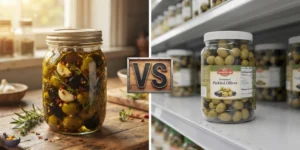
Curious about the difference between glass jar vs plastic jar for achar? Glass is almost always the better long-term choice, especially for vinegar-based pickles like this one, since plastic can absorb acidic odors over time and slightly degrade with prolonged contact.
🇵🇰 Why This Recipe Reflects Authentic Pakistani Cuisine
The White Chickpea Pickle isn’t a modern invention — it’s rooted deeply in village-style pickle traditions where preserving seasonal produce was both practical and celebratory. Families would prepare large batches during winter, store them in earthen or glass jars, and enjoy them for months, often bringing them out especially during Ramadan as a flavorful side to iftar spreads.
This connects to a broader culinary heritage worth exploring — our article on the history of achar in Pakistani cuisine traces how pickling became such a central part of South Asian food culture, and why Desi Achar remains irreplaceable even in modern kitchens.
🍽️ Best Ways to Enjoy White Chickpea Pickle
Once your batch is ready, here’s how it fits into everyday Pakistani meals:
- With Paratha — A classic breakfast pairing that never goes out of style.
- With Biryani — Cuts through the richness of biryani beautifully.
- As a Side for Roti — Simple, comforting, and endlessly satisfying.
- In Chana Chaat — Add a spoonful to elevate your chaat’s flavor profile instantly.
For more pairing inspiration, take a look at our roundup of 10 best Pakistani dishes to pair with achar — it’s a great way to plan meals around your homemade pickle.
🌿 Health Considerations Worth Knowing
Like most traditional pickles, White Chickpea Pickle should be enjoyed in moderation due to its oil and salt content. That said, chickpeas themselves bring genuine nutritional value — protein, fiber, and various micronutrients — making this pickle a slightly more wholesome option compared to purely vegetable-based achars.
If you’re weighing the pros and cons of regular pickle consumption, our article on whether achar is good or bad for health breaks down the nutritional considerations in detail.
❓ Frequently Asked Questions
How long does homemade White Chickpea Pickle last?
When prepared correctly with adequate oil and proper sterilization, homemade White Chickpea Pickle can last anywhere from 3 to 6 months when stored in a cool, dry place away from direct sunlight.
Can I make this pickle without sun-drying?
Yes. While sun-drying is traditional and enhances flavor along with shelf life, you can skip this step and store the pickle immediately after marination — just be extra careful about jar sterilization and oil coverage.
What type of oil is best for this pickle?
Mustard oil is the traditional and recommended choice, as it has natural preservative properties and complements the spice blend used in most Pakistani pickle recipes.
Is vinegar necessary in this recipe?
Vinegar plays a key preservation role by lowering the pH, which helps prevent bacterial growth. While some traditional recipes rely solely on oil and salt, adding vinegar significantly extends shelf life. You can learn more about this in our article on why vinegar is used for pickling.
Can I adjust the spice level in this recipe?
Absolutely. This recipe is easily adaptable — reduce red chili powder for a milder version, or increase it along with fresh green chilies if you prefer a Spicy Chickpea Pickle Recipe.
🎯 Final Thoughts
Making White Chickpea Pickle at home is a rewarding process that connects you to generations of Pakistani culinary tradition. From carefully boiling the chickpeas to tempering mustard oil and patiently waiting through marination, every step contributes to that final jar of deeply flavorful, tangy, spice-packed achar that instantly elevates any meal.
If you’d rather skip the hours of preparation but still want that same authentic taste, Achar Mart has you covered. Our White Chickpea Pickle is made using traditional methods, quality ingredients, and zero shortcuts — exactly the way your grandmother would have made it.
Ready to bring authentic Pakistani flavor to your table? Browse our full pickle collection and discover why home cooks across Pakistan trust Achar Mart for their achar needs.