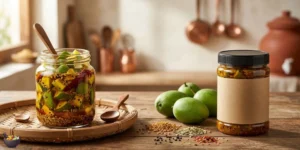
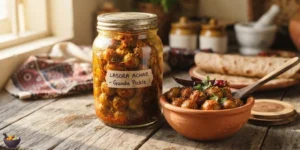
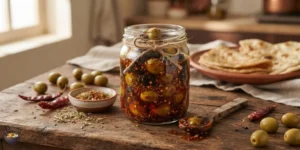
You finish the last piece of mango pickle, and there it sits: a jar of glossy, red-gold oil, packed with spice. Most of us tip it down the sink without a second thought. That’s a mistake. Knowing how to use leftover achar oil in cooking turns a “waste” product into one of the most flavorful ingredients in your kitchen.
Achar oil has soaked up weeks or months of mustard seeds, fennel, nigella, red chili, and fruit essence. A single spoonful can lift a plain dal, a boring sabzi, or a sleepy paratha into something special. It’s also a simple, honest way to practice zero waste cooking without changing your routine.
In this guide, you’ll learn what achar oil is, whether it’s safe to reuse, how to prepare it, and 12 practical ways to cook with it. You’ll also find storage tips and answers to the most common questions.
🫙 What Is Achar Oil, and Why Is It Worth Saving?
Achar oil is the oil left in the jar after you’ve eaten the pickle. Traditionally, it’s mustard oil, though some families use sesame or vegetable oil. Over time, it picks up the flavor of everything in the jar.
What Makes It So Flavorful?
Think of it as a ready-made spice infusion. Depending on the pickle, the oil may carry:
- Fennel, nigella (kalonji), fenugreek, and mustard seeds
- Red chili and turmeric
- Garlic, ginger, or green chili notes
- A gentle tang from raw mango, lime, or other fruit
- Salt, which is already built in
That’s why a mango pickle oil tastes completely different from plain cooking oil. It brings tangy and spicy flavor in one pour.
Pickle Brine vs. Pickle Oil
People often mix these up, so here’s the difference.
- Pickle brine is water-based liquid, usually salt, vinegar, or both. Western-style pickles use it.
- Pickle oil is fat-based. Desi achar is usually preserved in oil, so the liquid left behind is oil, not brine.
This matters in the kitchen. Oil can be heated for tadka. Brine can’t. If your achar jar has watery liquid at the bottom, that’s closer to brine, and it behaves very differently from the oil on top.
✅ Is Achar Oil Safe to Reuse?
This is the first thing to settle, so let’s be clear. Is achar oil safe to reuse? In most cases, yes, when the pickle was properly made and stored, and the oil still looks and smells right. Pickles are acidic, salty, and well-preserved, which helps keep the oil stable.
That said, “most cases” isn’t “every case.” Use your eyes and nose first.
Signs the Oil Is Fine to Use
- It smells pleasantly spicy, tangy, or mustardy
- The color is clear red, golden, or amber
- There’s no fuzz, film, or floating mold
- The jar was kept closed and stored away from heat
- You always used a clean, dry spoon to take out pickle
Throw It Away If You Notice
- White, green, or black mold on the surface
- A sour, rotten, or “off” smell (different from a normal tangy smell)
- Fizzing or bubbling
- Water droplets mixed into the oil
- A jar that was left open for long periods or handled with wet hands
If you’re unsure, don’t use it. A little oil isn’t worth a stomach ache. For more on jar care, read our guide on how to store achar for maximum freshness and shelf life.
A quick note: if you have a health condition that needs a low-salt or low-fat diet, check with your doctor before cooking with pickle oil regularly. Our article on whether achar is good or bad for health explains the balance.
🥄 How to Prepare Leftover Achar Oil Before Cooking
A little prep makes the oil work better in food. It takes two minutes.
- Smell and look first. Run the safety check above.
- Strain if needed. If the oil has big chunks of pickle, chili, or soft fruit pulp, strain it through a fine sieve. Small spice bits can stay for flavor, but large pieces may burn.
- Taste a drop. Achar oil is already salty and often spicy. Know what you’re working with.
- Cut back on salt and chili. When you add achar oil to a dish, reduce the salt and red chili powder, then adjust at the end.
- Heat gently. Mustard-based oil can turn bitter if overheated. Warm it over medium heat, not high.
Pro tip: If you want a milder flavor, mix achar oil with regular cooking oil in a 1:2 ratio. You’ll still get the aroma, but the heat and salt won’t overwhelm your dish.
🍳 12 Ways to Use Leftover Achar Oil in Cooking
Here are the best, most reliable ways to put that jar to work. Each one is simple, and most need no extra shopping.
1. Achar-Flavored Tadka for Dal
This is the classic. Heat a tablespoon of achar oil, add cumin and a dried red chili, then pour it sizzling over cooked dal. Done.
If you’re wondering how to use achar oil for tadka, this is the easiest entry point. Because the oil is already seasoned, you need fewer spices. Masoor, moong, and mash dal all work beautifully with it.
2. Spicy Pickle Oil Tempering for Sabzi
Use spicy pickle oil tempering at the start of cooking vegetables. Warm the oil, add onions, and build your sabzi from there.
It’s lovely with:
- Aloo gobi
- Bhindi (okra)
- Baingan (eggplant)
- Kaddu (pumpkin)
Skip extra salt until the end, since the oil already carries some.
3. Achar Paratha
Brush a little achar oil on the paratha while it cooks. The edges turn crisp, and the aroma fills the kitchen. This is one of the simplest ways to enjoy achar paratha without making a stuffed one.
You can also knead a teaspoon into the dough for a subtle spiced flavor. For serving ideas, see our list of the 10 best Pakistani dishes to pair with achar.
4. Marinade for Chicken, Paneer, or Fish
Achar oil makes a bold marinade base. Mix it with yogurt, a little lemon juice, ginger-garlic paste, and salt (go light).
- Chicken: Marinate for 2 to 4 hours
- Paneer: 30 minutes is enough
- Fish: 20 to 30 minutes, no longer
This is the answer to achar oil for marination of chicken or paneer, and it’s how many home cooks get restaurant-style tikka flavor. Grill, bake, or pan-sear after.
5. Achar Masala Curry Base
For a quick achar masala curry, warm the oil, add sliced onions, tomatoes, and the leftover masala from the jar if there’s any. Simmer until soft, then add your protein or vegetables.
It gives a tangy, slightly sharp finish that works well with chickpeas, eggs, or potatoes.
6. Rice and Pulao Booster
Stir one teaspoon of achar oil into cooked rice, or use it to sauté cumin before making pulao. You’ll get fragrant, lightly spiced rice with almost no effort.
Lemon-flavored or mango-flavored oil is best here, since the tang suits rice.
7. Egg Dishes
Scrambled eggs, omelets, and egg bhurji all love a spoonful of achar oil. Use it in place of butter or regular oil in the pan.
Add chopped onions and green chilies, and you’ve got a breakfast that tastes like it took much longer than five minutes.
8. Noodles and Stir-Fries
Desi-Chinese cooking and achar oil are a great match. Use it to toss noodles, fried rice, or stir-fried vegetables. A drizzle at the end adds heat and tang.
9. Salad Dressing and Chaat
Whisk achar oil with lemon juice, a pinch of black pepper, and a little honey or sugar. You now have a spicy dressing for:
- Cucumber and onion salad
- Chickpea chaat
- Boiled potato salad
- Sprouts salad
This is a smart kitchen hack for Indian pickle lovers who want a quick, no-fuss dressing.
10. Roasted Vegetables and Potatoes
Toss vegetables with achar oil before roasting. Potatoes, cauliflower, sweet potatoes, and carrots all come out golden and flavorful.
Roast at a moderate temperature (around 200°C) so the spices don’t scorch.
11. Sandwiches, Wraps, and Rolls
Mix a teaspoon of achar oil into mayonnaise or hung curd for a tangy and spicy spread. Use it in veggie wraps, chicken rolls, or grilled sandwiches.
Or brush it directly onto the bread before toasting.
12. Dips and Chutneys
Blend achar oil into mint chutney, tamarind chutney, or a simple yogurt dip. A small spoonful adds depth without extra ingredients.
Stirred into raita, it makes a great side for biryani.
🍟 Can You Fry With Pickle Oil?
Short answer: lightly, yes. Deep frying, not recommended.
Here’s why. Achar oil contains salt, spice particles, and trace moisture from the pickle. When heated for a long time:
- The spices can burn and turn bitter
- Moisture can cause splattering
- The flavor can become harsh
- Reheating the same oil repeatedly isn’t a good idea
For shallow frying, sautéing, tadka, or pan-searing, it works well. For pakoras or deep-fried snacks, use fresh oil and save the achar oil for finishing touches.
⏳ Does Achar Oil Go Bad? Storage and Shelf Life
Yes, it can. The shelf life of pickle oil depends on how clean the jar was kept and how you store it afterward.
Storage Tips
- Keep it in the original jar or move it to a clean, dry glass bottle
- Seal it tightly to keep air and moisture out
- Store in a cool, dark place, or in the fridge if your kitchen is warm
- Never dip wet spoons into the oil
- Label the date you started using it as cooking oil
How Long Can I Store Leftover Achar Oil?
A reasonable guideline is a few weeks in the fridge if the oil is clean and strained. Oils can thicken or turn cloudy when cold, but they clear up at room temperature. This isn’t a strict rule, so always trust the smell and appearance over the calendar.
For long-term pickle storage, see our guide on how to store achar for maximum freshness.
📊 Quick Reference: Which Dish Suits Which Oil?
Different pickles leave behind different flavors. This table shows what to pair.
| Oil Source | Flavor Profile | Best Used For |
|---|---|---|
| Mango pickle oil | Tangy, bold, mustardy | Tadka, parathas, marinades |
| Mixed pickle oil | Complex, spicy | Curries, rice, sabzi |
| Garlic pickle oil | Sharp, pungent | Noodles, eggs, stir-fries |
| Lime pickle oil | Citrusy, bright | Salad dressing, rice, dips |
| Green chili pickle oil | Hot and fresh | Chaat, wraps, egg dishes |
In short, match the oil’s character to the dish. Citrusy oils brighten, while garlicky or chili-heavy oils add depth.
Want to see what flavors are available? Browse our mango pickle collection, the mix pickle range, or garlic pickle.
🚫 Common Mistakes to Avoid
Even a good idea can go wrong without a few ground rules.
- Using too much. Start with one teaspoon, then build up.
- Adding extra salt too early. The oil is already salty.
- Overheating the oil. It can taste bitter and smoke.
- Reusing contaminated oil. If the jar was touched with wet hands, skip it.
- Mixing multiple old jars. Combining oils can create odd flavors and muddy your dish.
- Ignoring allergies and diet needs. Check spices if you cook for children or guests with restrictions.
🌱 Why Reusing Achar Oil Makes Sense
Using leftover achar oil is more than a clever trick. It’s part of a long desi tradition of making the most of every ingredient. If you’re curious about that heritage, our post on the history of achar in Pakistani cuisine is worth a read.
The benefits are practical:
- Less food waste. You use what you’ve already paid for.
- More flavor, less effort. One ingredient replaces several spices.
- Budget-friendly cooking. Fewer extra ingredients to buy.
- Better pickle jar value. You enjoy the pickle and the oil.
Better pickle oil starts with better pickle. Traditional, small-batch achar uses quality oil and spices, which is why the leftover oil tastes so good. You can read more about what goes into a good jar in our guide to authentic Pakistani pickles, or about why vinegar is used for pickling if you’re curious about the science.
❓ Frequently Asked Questions
Can I cook with leftover achar oil?
Yes. If the oil smells fresh, has no mold, and was stored properly, you can use it for tadka, sautéing, marinades, and dressings. Use small amounts first, since it’s already salty and spicy.
Is it safe to use old pickle oil for cooking?
Usually, yes, if it looks and smells normal. Discard it if you see mold, notice a sour or rotten smell, spot water droplets, or see bubbling. When in doubt, throw it out.
What can I make with achar oil?
Dal tadka, sabzi, parathas, marinades, egg dishes, rice, noodles, roasted vegetables, salad dressings, sandwich spreads, and chutneys all work well.
How do I add achar oil to dal or sabzi?
For dal, heat 1 tablespoon of oil, add cumin and dried chili, and pour it over cooked dal. For sabzi, use it at the start as your cooking oil, then lower the salt and chili powder.
Can I fry with pickle oil?
Light frying and sautéing are fine. Deep frying isn’t ideal because the spices can burn, and moisture can cause splatter.
How long can I store leftover achar oil?
When strained, sealed, and refrigerated, it generally lasts a few weeks. Always check the smell and appearance before use.
Does achar oil go bad?
Yes, especially if exposed to moisture, heat, or contamination. Store it in a clean, dry, airtight container.
🏁 Conclusion: Don’t Pour That Flavor Down the Drain
Leftover achar oil is a small kitchen treasure. With the right care, it can transform dal, sabzi, parathas, marinades, and even salads, all while cutting waste and saving money.
To recap the essentials:
- Check the oil for smell, color, and mold first
- Strain it and taste before cooking
- Use less salt and chili in your dish
- Stick to tadka, sautéing, and marinades rather than deep frying
- Store it clean, dry, and cool
Now you know how to use leftover achar oil in cooking, so the next empty jar is an opportunity, not trash.
🛒 Ready to Stock Your Kitchen?
Great leftover oil starts with a great pickle. Explore our full range of handcrafted achar at the Achar Mart shop, try our best-selling mango pickle or mix pickle, or learn where to buy pickles online in Pakistan. Order today, enjoy the achar, and then put every last drop of that flavorful oil to work.