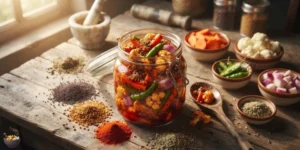
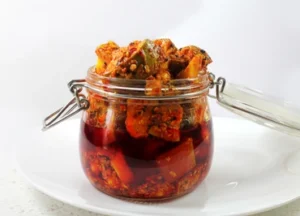
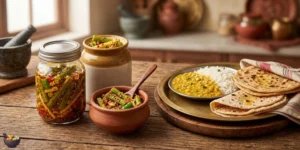
Open any Pakistani kitchen in summer and you will probably find a glass jar of mango achar sitting in the sun, glistening with golden oil. That sharp, nose-tingling aroma? It usually comes from one ingredient: sarson ka tel.
Mustard oil in Pakistani pickles is not a recent trend. It is a tradition passed down through generations of Punjabi and Pakistani households. But in the last few years, people have started asking serious questions. Is mustard oil actually healthy? Is it safe to eat every day? Why do some countries restrict it?
This guide gives you honest, balanced answers. We look at why mustard oil is used in achar, its genuine benefits, its real risks, and how to choose a pickle you can enjoy with confidence.
Why Is Mustard Oil Used in Pakistani Pickles?
Ask your grandmother why achar is always made with sarson ka tel, and she will likely say, “Because that is how it has always been done.” She is right, and there is also real science behind the habit.
1. It acts as a natural preservative
Pickling is all about keeping food safe and flavorful for months. A layer of oil on top of the pickle seals out air, which slows spoilage. Mustard oil also contains a compound called allyl isothiocyanate, which gives it antimicrobial properties. That is why a well-made pickle in mustard oil can last a long time without refrigeration.
2. It delivers that unmistakable pungent flavor
Mustard oil has a sharp, bold taste and aroma that no other oil quite matches. Combined with achar masala, a blend of methi (fenugreek), saunf (fennel), kalonji (nigella), rai (mustard seeds) and red chili, it creates the signature taste of desi pickles.
3. It handles heat and spices well
Mustard oil has a high smoke point, so it can be heated until it loses its raw edge before being poured over spices. This step, common in traditional recipes, mellows the pungency and helps the spices release their flavor.
4. It is deeply cultural
From aam ka achar to nimbu ka achar, gajar ka achar and lasan ka achar, mustard oil has been part of the story for centuries. If you enjoy food history, our article on the history of achar in Pakistani cuisine is a good place to continue.
What Is Mustard Oil (Sarson Ka Tel)?
Mustard oil is extracted from mustard seeds. In Pakistan you will mostly see two types:
- Kachi ghani (cold-pressed) mustard oil: Made by pressing seeds at lower temperatures. It keeps more of the natural aroma, color and pungency.
- Refined mustard oil: Processed to reduce the sharp smell and taste. It looks lighter and milder.
Nutritionally, mustard oil is known for:
- A high share of monounsaturated fats (roughly 60% in typical profiles)
- A moderate amount of polyunsaturated fats, including omega-3 and omega-6 fatty acids
- A relatively low amount of saturated fat compared to many cooking fats
- A high concentration of erucic acid, which is at the center of the safety debate
Exact numbers vary by seed variety and processing, so treat these as general ranges.
The Health Benefits of Mustard Oil in Pickles
Let us start with the good news. Used sensibly, mustard oil brings some genuine advantages.
Heart-friendly fats (in moderation)
Mustard oil’s mix of monounsaturated and polyunsaturated fats, including some omega-3 (alpha-linolenic acid), is often linked to heart health and healthier cholesterol levels when it replaces saturated fats in the diet. The key phrase is “when it replaces.” A spoonful of pickle oil will not cure anything, but swapping heavy saturated fats for better fats is a sound habit overall.
Natural antimicrobial support
The compounds that give mustard oil its bite have shown antibacterial and antifungal activity in laboratory studies. This is part of why it works so well for pickle preservation. It is a bonus for food safety, though it is not a substitute for proper hygiene, salt and dry utensils.
May support digestion
Spices like fennel, fenugreek and nigella, combined with mustard oil, are traditionally used to stimulate appetite and support digestion and gut health. Many people in Pakistan enjoy a little achar alongside rich or heavy meals for this reason.
Anti-inflammatory potential
Mustard oil contains omega-3 fats and plant compounds that may have anti-inflammatory properties. Most of the research is early-stage or based on traditional use, so treat this as a possible benefit rather than a medical claim.
Warming, flavorful and satisfying
A small amount of intensely flavored food can make a plain meal of dal-chawal or paratha deeply satisfying. A little goes a long way, which can help with portion control.
Want to know how pickles fit into a balanced diet? Read our guide on whether achar is good or bad for health and the top 6 health benefits of pickles.
The Health Risks and Cons You Should Know About
Now the honest part. Mustard oil is not risk-free, and it deserves a fair look.
1. Erucic acid: the main concern
Traditional mustard oil can contain a high percentage of erucic acid. In animal studies, very high intakes were linked to fat build-up in heart tissue. Because of this, regulators such as the US FDA do not approve mustard oil as an edible oil (it is sold in the US for external use only), and the EU and other bodies set strict erucic acid limits for food oils.
Here is the balanced view:
- Evidence of harm in humans at normal dietary amounts is limited and debated.
- Mustard oil has been eaten for centuries in South Asia.
- Most regulators still advise caution because long-term data is incomplete.
For pickles, the amount you eat per serving is small, so the exposure is usually low. It still adds up if you eat large portions daily and also cook with mustard oil.
2. Pickles are high in salt
This one is not about the oil, but it matters. Traditional achar relies on generous salt content for preservation. Too much sodium can raise blood pressure, which is a real worry for people with heart or kidney problems.
3. It is calorie-dense
Oil is concentrated energy. A spoonful of oily pickle may not seem like much, but it adds up quickly if you eat several servings a day.
4. Pungency can irritate sensitive stomachs
The same compounds that give mustard oil its kick can trigger acidity, heartburn or stomach discomfort in some people, especially when eaten on an empty stomach.
5. Adulteration is a real problem
Poor-quality or adulterated mustard oil, mixed with cheaper oils or artificial colors, can cause far more harm than pure oil. This is probably the biggest practical risk for ordinary buyers.
Is Mustard Oil Pickle Safe? Who Should Be Careful?
For most healthy adults, a small serving of mustard oil achar with meals is generally considered fine. A few groups should be more careful:
- People with heart disease or high cholesterol: Check with your doctor, and watch both oil and salt.
- Those with high blood pressure or kidney issues: Salt is the bigger concern here.
- Pregnant women: Moderation is wise. Spicy, oily pickles can worsen heartburn, so follow your doctor’s advice.
- Diabetic patients: The pickle itself is low in sugar, but sweet pickles or oily portions need watching. Keep portions small and monitor your meals.
- Anyone with acidity, ulcers or IBS: Spicy, pungent foods may trigger symptoms.
- Young children: Keep portions very small and the spice level low.
This is general information, not medical advice. If you have a medical condition, speak with a doctor or registered dietitian.
How Much Mustard Oil Is Safe to Consume?
There is no single official daily limit for mustard oil in Pakistan. As a practical rule of thumb:
- Treat pickle as a side dish or condiment, not a main item. One to two teaspoons per meal is plenty.
- Try not to use mustard oil as your only cooking oil. A rotation of oils reduces dependence on any single fat.
- Prefer cold-pressed oil from a trusted source.
Moderation is the real answer to almost every nutrition question about achar.
Mustard Oil vs Sunflower Oil vs Canola Oil for Pickles
Many modern pickle makers are asking whether they can switch. Here is how the options compare.
| Feature | Mustard Oil | Sunflower Oil | Canola Oil |
|---|---|---|---|
| Flavor | Sharp, pungent, bold | Neutral, mild | Neutral, mild |
| Traditional taste | Excellent | Weaker | Weaker |
| Natural antimicrobial effect | Stronger (allyl isothiocyanate) | Minimal | Minimal |
| Erucic acid | High | Very low | Very low |
| Fits desi achar | Yes | Partly | Partly |
The bottom line: Mustard oil gives the most authentic taste and preservation support. Sunflower or canola oil is a lighter, lower-erucic-acid option, but you will miss the traditional character. Neither choice is wrong. It depends on your priorities, whether that is taste, tradition or caution.
Interestingly, canola was bred from rapeseed specifically to reduce erucic acid, which is why the two oils are so often compared.
Does Mustard Oil Really Help Preserve Pickles?
Yes, but oil is only one part of the system. A long-lasting achar needs:
- Enough salt to draw out moisture and discourage bacteria
- Proper acidity (from lemon, vinegar or the fruit itself). Curious about the science? Read why vinegar is used for pickling
- Sun-drying of raw ingredients to remove surface moisture
- Clean, dry jars and utensils
- A sealing layer of oil that keeps ingredients submerged
Mustard oil’s natural antimicrobial properties give an extra layer of protection. For storage tips after opening a jar, see our guide on how to store achar for maximum freshness and shelf life.
Mustard Oil in Popular Pakistani Pickles
Here is how sarson ka tel shows up in some favorite varieties:
- Aam ka achar (mango pickle): The classic. Raw mango, methi, saunf, kalonji and plenty of oil. Try our step-by-step crunchy mango pickle recipe or explore the best mango pickle in Pakistan buyer’s guide.
- Lasan ka achar (garlic pickle): Bold and aromatic. Read about garlic pickle health benefits or learn how to make a spicy garlic pickle.
- Nimbu ka achar (lime pickle): Tangy and salty, with a long shelf life. See our lime pickle health benefits guide.
- Gajar ka achar (carrot pickle): Crunchy, slightly sweet and deeply flavorful. Learn more in our carrot pickle guide.
- Mixed vegetable pickle: A colorful mix of seasonal vegetables. Our traditional Pakistani mixed pickle guide covers this in detail.
- Mirch ka achar (green chili pickle): A fiery favorite for spice lovers.
Pairing ideas? See the 10 best Pakistani dishes to pair with achar.
How to Choose Pure, Good-Quality Mustard Oil Pickle
Because adulteration is a real concern, a little label-reading goes a long way. Use this checklist:
- Look for kachi ghani or cold-pressed oil. It should have a strong natural aroma and a pungent bite.
- Check the color. Genuine mustard oil is usually golden to amber. An unnaturally bright or pale color can be a warning sign.
- Read the ingredient list. Short and clear is better. Avoid unnecessary artificial colors and chemical additives.
- Buy from trusted sellers. A brand that is open about ingredients and sourcing is more likely to care about quality.
- Check the oil layer. A clean, clear oil layer on top is a good sign. Cloudy or foul-smelling oil is not.
- Smell it. Rancid oil has a flat, sour or paint-like smell. Mustard oil should smell sharp, not stale.
Looking for trusted options? Browse our guides on authentic Pakistani pickles and buying organic achar online in Pakistan, or explore the full range in our online pickle shop.
Smart Ways to Enjoy Achar Without the Worry
You do not have to give up pickles to eat well. A few easy habits make a big difference:
- Keep portions small. One or two teaspoons per meal is usually enough.
- Drain extra oil. Scoop the pickle pieces rather than the oil.
- Balance your plate. Pair achar with fiber-rich foods like dal, vegetables and whole grains.
- Watch your overall salt. If your pickle is salty, go lighter on salt elsewhere.
- Stay hydrated and avoid eating very spicy pickle on an empty stomach.
- Rotate your oils for everyday cooking.
Frequently Asked Questions About Mustard Oil in Pickles
Is mustard oil safe to eat in pickles?
For most healthy adults, eating small portions of mustard oil pickle is generally considered safe. The concern is mostly about erucic acid and total intake over time, so moderation and good-quality oil matter.
Why is mustard oil used in Pakistani pickles?
It adds a distinctive pungent flavor, supports preservation thanks to its antimicrobial compounds, and stays true to a long-standing culinary tradition.
What is erucic acid and is it harmful?
Erucic acid is a fatty acid found naturally in mustard and rapeseed oils. High intakes have caused heart-related effects in animal studies. Human evidence at normal dietary levels is limited, but regulators in several countries restrict it as a precaution.
Is mustard oil banned for cooking in some countries?
In the US, mustard oil is not approved as an edible oil and is sold for external use only. Other regions, including the EU, set limits on erucic acid in food oils. It remains widely used in South Asia.
Can people with heart problems eat mustard oil pickle?
They should ask their doctor first. Both the oil and the high salt content can be relevant. Very small portions may be acceptable for some people, but medical advice should come first.
Can diabetic patients eat mustard oil pickle?
Savory pickles are low in sugar, so small portions are usually manageable, but sweet pickles and oily servings need care. Monitoring portions and checking with a healthcare provider is best.
Is mustard oil pickle safe during pregnancy?
In small amounts it is commonly eaten, but spicy, oily and salty foods can worsen heartburn and swelling. Always follow your doctor’s guidance.
How can I check if mustard oil is pure?
Look for a strong natural aroma, a golden color, a clear ingredient list and a reputable seller. Cold-pressed (kachi ghani) oil from a trusted brand is usually a safer choice.
Final Thoughts: Should You Enjoy Mustard Oil Pickles?
Mustard oil in Pakistani pickles is a story of flavor, culture and clever food science. It preserves, it adds a bold taste, and it brings a mix of fats that can fit into a balanced diet. At the same time, erucic acid, salt, calories and adulteration are real issues that deserve attention.
The smartest approach is simple: choose pure, cold-pressed oil, keep portions modest, and enjoy achar as a flavorful companion to your meal rather than the main event. That way you protect both your health and a beloved tradition.
Ready to Taste Authentic Pakistani Achar?
Craving that perfect balance of spice, tang and tradition? Explore our handpicked range of pickles online in Pakistan, from mango pickle and mix pickle to garlic pickle and lime pickle.
Order today and bring the real taste of desi achar to your table. Visit the Achar Mart shop now.