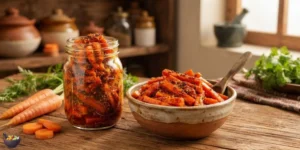
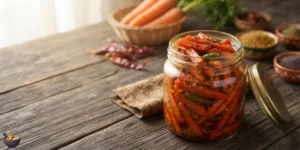
If you’ve ever stood in a grocery aisle staring at a jar of pickle, wondering whether it’s actually good for you, you’re not alone. The carrot pickle vs store-bought pickle debate has been simmering in Pakistani kitchens for years — and for good reason. On one side, you have the deep, tangy flavor of traditional homemade carrot achar passed down through generations. On the other, you have the convenience of a sealed jar that promises the same taste without the effort. But when it comes to actual health value, these two are not created equal. Let’s unpack exactly what’s inside each one, so you can make a choice that’s good for your taste buds and your body.
🥕 What Makes Carrot Pickle Nutritionally Valuable?
Before comparing the two options, it helps to understand why carrots themselves are such a nutritional powerhouse in the first place. This single ingredient is doing a lot of heavy lifting in your pickle jar.
Key Nutrients Found in Carrots
Carrots are naturally loaded with:
- Vitamin A (Beta-Carotene): Supports eye health and immune function
- Fiber: Aids digestion and keeps you feeling full
- Antioxidants: Help fight oxidative stress in the body
- Potassium: Supports healthy blood pressure levels
- Vitamin K and C: Contribute to bone health and immunity
When carrots go through the traditional pickling process, many of these nutrients remain largely intact — especially when the pickle is made using natural fermentation rather than aggressive heat processing.
Carrot Pickle Nutrition Facts: What Actually Changes During Pickling
Pickling doesn’t just preserve carrots — it transforms them. The natural fermentation process encourages the growth of beneficial bacteria, which can actually increase certain nutritional benefits rather than diminish them. This is one of the biggest carrot pickle health benefits that most people simply don’t know about.
If you want a deeper breakdown of this specific product, our detailed guide on carrot pickle covers exactly how this works from start to finish.
🏭 How Store-Bought Pickles Are Typically Made
Here’s where things start to diverge. Mass-produced pickles are built for shelf stability, not necessarily for nutrition. Factories need their products to survive months — sometimes years — on a shelf, in a truck, or in a warehouse before they ever reach your kitchen table.
Common Preservatives in Store-Bought Pickles
To achieve that long shelf life, most commercial pickle brands rely on:
- Sodium benzoate – a chemical preservative that prevents microbial growth
- Excess salt (sodium) – used far beyond traditional recipes to inhibit spoilage
- Added sugar – often used to balance out harsh preservative flavors
- Artificial coloring agents – to keep the product visually appealing for longer
- Stabilizers and thickeners – to maintain consistent texture across batches
None of these ingredients are inherently “dangerous” in small amounts, but when consumed regularly over months and years, they add up.
Store-Bought Pickle Health Risks Worth Knowing
The real concern isn’t one jar — it’s the cumulative effect. Regularly consuming high-sodium, preservative-heavy condiments has been linked to:
- Elevated blood pressure over time
- Reduced gut microbiome diversity
- Higher sugar intake without realizing it
- Lower nutrient density compared to fresh, naturally pickled alternatives
This is precisely why so many health-conscious buyers are now asking: is homemade pickle healthier than store-bought in the long run? For most people, the honest answer is yes — and the next section explains exactly why.
⚖️ Carrot Pickle vs Store-Bought Pickle: A Side-by-Side Comparison
Sometimes the clearest way to see the difference is to put both options next to each other.
| Factor | Homemade Carrot Pickle | Store-Bought Pickle |
|---|---|---|
| Preservatives | Minimal or none (natural oil/vinegar) | Often contains artificial preservatives |
| Sodium Content | Controlled, traditional levels | Frequently higher than needed |
| Fermentation | Natural, slow fermentation process | Often skipped or chemically accelerated |
| Probiotics | Naturally present | Usually destroyed during pasteurization |
| Ingredient Transparency | Full control over what goes in | Dependent on label accuracy |
| Shelf Life | Shorter, but fresher | Longer, due to added preservatives |
| Taste Authenticity | Deep, traditional flavor | Often standardized, less complex |
As this table shows, the store-bought vs homemade pickles comparison isn’t really close when you weigh nutrition and ingredient quality against pure convenience.
🌿 Homemade Carrot Pickle Benefits You Shouldn’t Overlook
Let’s go a little deeper into why homemade (or authentically small-batch produced) carrot achar tends to come out ahead.
1. Natural Fermentation Supports Gut Health
Traditional pickling relies on a natural fermentation process where beneficial bacteria break down sugars in the vegetables. This process produces probiotics, which are directly linked to improved digestion and a healthier gut microbiome. Store-bought pickles, especially those using vinegar-only quick-pickling methods combined with pasteurization, often lose this probiotic advantage entirely.
If you’re curious why vinegar plays such an important role in some pickling methods, this piece on why vinegar is used for pickling explains the science in simple terms.
2. No Hidden Artificial Preservatives
When you know exactly what’s going into your jar — carrots, mustard oil, spices, salt, and time — you remove the guesswork. There are no artificial preservatives hiding behind an ingredients label you need a chemistry degree to decode.
3. Higher Nutrient Retention
Because traditional methods use gentler processing, more of the carrot’s original vitamin and antioxidant content survives the pickling process. This nutrient retention is one of the most underrated carrot pickle recipe benefits, especially for anyone trying to eat clean without sacrificing flavor.
4. Better Control Over Sodium and Sugar
You decide how much salt goes in. You decide if sugar is even necessary. This level of control simply doesn’t exist with mass-produced jars sitting on a supermarket shelf.
For a broader look at why pickling at home has become so popular again, check out 5 reasons to start pickling at home.
🧪 Is Homemade Pickle Healthier Than Store-Bought? The Honest Verdict
Here’s the balanced truth: not every store-bought pickle is unhealthy, and not every homemade pickle is perfect. Quality depends heavily on how it’s made, not just where.
However, when we compare like-for-like — a traditionally made, small-batch carrot achar versus a mass-produced, preservative-heavy jar from a factory line — the homemade (or authentically crafted) version almost always wins on:
- Ingredient transparency
- Probiotic content
- Lower unnecessary additives
- Better flavor depth from slow fermentation
This is also discussed in more general terms in our article on whether achar is good or bad for health, which breaks down the bigger picture beyond just carrot pickle specifically.
🆚 Carrot Achar vs Commercial Achar: What Should You Actually Choose?
If you’re trying to decide between making your own batch or buying a trusted brand, here’s a simple way to think about it:
Choose homemade/traditional carrot achar if:
- You want full control over ingredients
- You’re managing sodium or sugar intake
- You care about probiotic and gut health benefits
- You enjoy deep, authentic South Asian flavor
Choose a trusted commercial brand if:
- You want convenience without sacrificing quality
- The brand uses traditional recipes and natural preservation (like oil-based curing instead of chemical preservatives)
- You’ve verified the ingredient label is clean and transparent
This is exactly why sourcing from a brand that follows traditional pickling methods rather than industrial shortcuts matters so much. Our carrot pickle product page is a good example of how commercial pickle can still stay close to homemade standards when made the right way.
🏆 How to Choose the Healthiest Pickle Option When Buying
If making your own batch at home isn’t practical, you don’t have to compromise entirely. Here’s what to look for on any label:
- Short ingredient list — fewer ingredients usually means fewer additives
- No artificial coloring — natural carrot color should already look vibrant
- Mustard oil or natural oil base — rather than synthetic preservative blends
- No added sugar unless intentional — sugar shouldn’t be masking poor quality
- Clear sodium content — moderate, not excessive
Brands that follow organic or traditional sourcing tend to score much better here. Our guide on buying organic achar online in Pakistan walks through exactly what “organic” should actually mean on a pickle label — not just a marketing buzzword.
📦 Why Proper Storage Also Affects Pickle Health Value
One factor people often overlook in this comparison is storage. Even the healthiest carrot pickle can lose its nutritional edge — or worse, develop harmful bacteria — if it isn’t stored correctly.
Key storage basics:
- Always use a clean, dry spoon
- Keep the jar tightly sealed between uses
- Store in a cool, dry place away from direct sunlight
- Refrigerate once opened if the recipe doesn’t contain heavy oil preservation
For a complete breakdown, our article on how to store achar for maximum freshness and shelf life is worth bookmarking regardless of which pickle you choose.
🌱 The Bigger Picture: Fermented Foods and Long-Term Health
Zooming out from carrot pickle specifically, it’s worth noting that fermented vegetables in general have earned renewed attention from health researchers in recent years. The connection between gut microbiome diversity and overall wellness — including immunity, digestion, and even mood regulation — continues to strengthen the case for naturally fermented condiments over heavily processed alternatives.
This broader context is explored further in our piece on the benefits of pickling fruits and vegetables, and if you want the full nutritional rundown across pickle types generally, the top 6 health benefits of pickles is a great companion read.
✅ Final Verdict: Carrot Pickle vs Store-Bought Alternatives
So, which one actually comes out on top?
When you compare nutrition density, preservative load, probiotic content, and ingredient transparency, traditionally made carrot pickle consistently outperforms mass-produced, preservative-heavy store-bought alternatives. The natural fermentation process, controlled sodium levels, and absence of artificial additives make it the smarter choice for anyone serious about long-term gut and overall health.
That said, convenience matters too — and the good news is you don’t have to choose between health and ease anymore. Brands that stay true to traditional recipes while offering the convenience of a ready-made jar give you the best of both worlds.
🛒 Ready to Taste the Difference?
If this comparison has you craving the real thing, skip the guesswork on supermarket labels. Explore our authentic carrot pickle collection made the traditional way — naturally fermented, free from unnecessary preservatives, and packed with the deep flavor homemade achar is known for. Browse our full pickle shop and bring home a jar that’s as good for your gut as it is for your taste buds.
❓ Frequently Asked Questions
Is carrot pickle healthier than store-bought pickle? Yes, in most cases. Traditionally made carrot pickle retains more nutrients, contains natural probiotics from fermentation, and avoids the artificial preservatives commonly found in mass-produced store-bought alternatives.
What are the main store-bought pickle health risks? The biggest risks come from excessive sodium, artificial preservatives like sodium benzoate, added sugar, and the loss of natural probiotics due to pasteurization during manufacturing.
Does homemade carrot pickle contain probiotics? Yes. When carrot pickle is made through natural fermentation, beneficial bacteria develop during the process, which supports gut health and digestion — a benefit typically lost in heavily processed commercial pickles.
How can I tell if a store-bought pickle is a healthier option? Check the ingredient label for a short list, natural oil-based preservation (like mustard oil), no artificial coloring, and controlled sodium levels. Fewer, more recognizable ingredients usually indicate a healthier product.
Is it safe to eat carrot pickle every day? Yes, in moderate amounts. Carrot pickle made with traditional methods and reasonable sodium levels can be enjoyed regularly as part of a balanced diet, especially when it supports digestion through natural fermentation.