If you’ve ever tasted a spoonful of Shikarpuri Achar, you already know it’s not just pickle — it’s an experience. This bold, tangy, and deeply aromatic condiment sits at the heart of Sindhi pickle traditions, a culinary heritage passed down through generations in the sun-baked lanes of Shikarpur, Sindh. While Pakistan is home to countless regional pickle styles, few carry the reputation, complexity, and cultural weight that Shikarpuri Achar does. It’s the pickle people specifically seek out from Shikarpur, the one families guard recipes for like treasured secrets, and the one that turns a simple roti-and-daal meal into something memorable.
In this guide, we’ll unpack exactly what makes Shikarpuri Achar so special — its history, ingredients, preservation methods, and the cultural rituals wrapped around it. By the end, you’ll understand why Sindhi pickle traditions remain one of Pakistan’s most flavorful and enduring food legacies.
🫙 What Is Shikarpuri Achar? A Quick Introduction
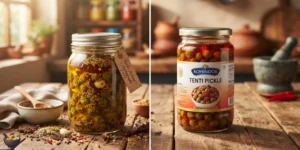
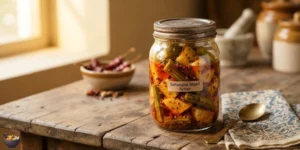
Shikarpuri Achar is a traditional Sindhi mixed pickle made using a combination of mangoes, lemons, green chilies, and warming spices, all preserved in mustard oil. Unlike lighter, vinegar-based pickles found in other regions, this achar is known for its:
- Deep, oil-forward richness
- Bold, layered spice profile
- Long fermentation and sun-drying process
- Strong regional identity tied to Shikarpur city
It’s less of a “condiment” in the Western sense and more of a flavor anchor — the thing that ties an entire Sindhi meal together. Whenever people discuss authentic Pakistani pickles, Shikarpuri Achar is almost always mentioned as the benchmark for what a true traditional achar should taste like.
📜 The Rich History of Sindhi Pickle Traditions
Origins in Shikarpur City
Shikarpur wasn’t always just a food town — it was historically one of Sindh’s most important trading and banking hubs, connected to Central Asia via ancient caravan routes. Merchants traveling long distances needed food that wouldn’t spoil, and pickling became the perfect solution.
Mustard oil, salt, and dried spices acted as natural preservatives, allowing achar to survive weeks of travel without refrigeration. Over time, this practical necessity evolved into an art form. If you’re curious about how this fits into the bigger picture, our deep dive on the history of achar in Pakistani cuisine traces this evolution across the entire country.
Achar’s Role in Sindhi Culture & Hospitality
In Sindhi households, achar isn’t an afterthought — it’s a symbol of hospitality. Offering guests a homemade jar of pickle is considered a mark of respect and warmth. It’s common at:
- Weddings and family gatherings
- Everyday lunches and dinners
- Festive occasions where multiple achar varieties are displayed proudly
This cultural weight is part of what separates Sindhi pickle traditions from being “just food” — it’s identity, memory, and generational pride bottled into a jar.
🌶️ What Makes Shikarpuri Achar Special?
This is the question everyone asks — and the answer lies in three key pillars: spice blend, ingredient authenticity, and preservation technique.
The Signature Spice Blend
Shikarpuri Achar’s flavor doesn’t come from heat alone. It comes from layering. A typical spice blend includes:
- Fenugreek seeds (methi dana) for bitterness and depth
- Fennel seeds (saunf) for subtle sweetness
- Nigella seeds (kalonji) for earthiness
- Turmeric (haldi) for color and warmth
- Red chili powder for controlled heat
Each spice is roasted separately before blending, releasing oils and aromas that simply can’t be replicated with pre-mixed store spice blends.
Authentic Ingredients That Define the Flavor
The base ingredients matter just as much as the spices. Traditional Shikarpuri Achar relies on:
- Raw mango (Aam) for tang and texture
- Lemon (Neenboo) for sharp acidity
- Green chili (Hari mirch) for freshness and heat
- Garlic and ginger for aromatic depth
If mango-based pickles are your favorite, it’s worth comparing this style against our mango pickle buyer’s guide to see how regional variations change the final taste.
Traditional Preservation Techniques
Here’s where Shikarpuri Achar really separates itself from mass-produced pickles:
- Sun-drying – ingredients are dried for days to remove moisture and intensify flavor
- Mustard oil sealing – oil acts as a natural barrier against bacteria
- Rock salt curing (Sanghar namak) – draws out water while enhancing shelf life
- Slow fermentation – develops complexity that can’t be rushed
This is essentially a manual, patience-driven version of the preservation science we cover in our guide on how to store achar for maximum freshness and shelf life.
👩🍳 Traditional Shikarpuri Achar Recipe: Step-by-Step Overview
While exact family recipes vary, the general traditional process follows this structure:
- Wash and cut raw mangoes, lemons, and chilies into uniform pieces
- Sun-dry the cut pieces for 1–2 days to remove excess moisture
- Roast spices individually — fenugreek, fennel, nigella, and chili
- Mix spices with salt and turmeric to create the masala base
- Coat the vegetables/fruits thoroughly in the spice mix
- Heat mustard oil until it reaches the right temperature, then cool slightly
- Pour oil over the mixture, ensuring everything is fully submerged
- Store in a sterilized jar and place in sunlight for 5–7 days, stirring daily
- Seal and store in a cool, dry place once fermentation stabilizes
This isn’t a rushed 30-minute recipe — it’s a ritual that rewards patience with unmatched depth of flavor.
⚖️ Sindhi Mixed Pickle vs Other Regional Pickle Styles
Punjabi Achar vs Sindhi Achar
While both regions love their pickles, the differences are noticeable:
| Aspect | Punjabi Achar | Sindhi/Shikarpuri Achar |
|---|---|---|
| Oil Quantity | Moderate | Heavier, oil-forward |
| Spice Style | Sharper, more mustard-forward | Layered, warmer spice blend |
| Sweetness | Occasionally sweetened | Rarely sweet, more tangy-savory |
| Texture | Firmer pieces | Softer, more integrated flavor |
For a broader look at how mixed pickles vary across Pakistan, check out our traditional Pakistani mixed pickle guide.
Homemade vs Store-Bought Achar
Homemade Sindhi pickle almost always wins on authenticity, but not everyone has the time for a week-long fermentation process. That’s where trusted brands step in — replicating traditional methods at scale without cutting corners on quality. If you’re comparing pickle types before buying, our breakdown of mango pickle vs lime pickle is a useful companion read.
🩺 Health Benefits of Traditional Sindhi Achar
Beyond flavor, Shikarpuri Achar offers some genuine nutritional upsides when consumed in moderation:
- Fermentation benefits – supports gut bacteria and digestion
- Mustard oil – contains beneficial fatty acids
- Spices like turmeric and fenugreek – known for anti-inflammatory properties
- Portion-controlled use – a small serving enhances digestion without overloading sodium intake
That said, moderation matters, especially for those watching sodium levels. Our detailed article on whether achar is good or bad for health breaks this down further.
🧊 How to Store Homemade Sindhi Pickle for Maximum Freshness
Proper storage is what separates a jar that lasts months from one that spoils in weeks:
- Use sterilized, airtight glass jars
- Keep the pickle fully submerged in oil
- Store in a cool, dry place away from direct sunlight after initial curing
- Use a clean, dry spoon every time to avoid contamination
- Avoid excess moisture entering the jar
For a complete freshness checklist, our guide on storing achar for maximum shelf life covers everything in detail.
🍛 Best Pakistani Dishes to Pair with Shikarpuri Achar
Shikarpuri Achar isn’t a standalone dish — it’s a flavor enhancer. It pairs beautifully with:
- Daal chawal (lentils and rice)
- Parathas and roti
- Biryani and pulao
- Karahi and curry-based dishes
- Simple khichdi for a comforting weeknight meal
For more pairing inspiration, take a look at our roundup of the 10 best Pakistani dishes to pair with achar.
🔑 Shikarpuri Achar Ka Raaz: The Real Secret Behind the Flavor
Ask any Sindhi grandmother about Shikarpuri Achar ka raaz, and she’ll likely smile before answering. The truth is, the “secret” isn’t one hidden ingredient — it’s the combination of:
- Time – nothing is rushed
- Quality ingredients – no shortcuts on freshness
- Family technique – recipes refined over generations
- Patience during fermentation – flavor development can’t be forced
This is exactly why homemade Sindhi pickle tastes different from jar to jar, family to family — each version carries its own signature, shaped by decades of tradition.
🛒 Where to Find Authentic Shikarpuri-Style Achar Today
Not everyone has a grandmother’s recipe book or the time for week-long fermentation — and that’s completely okay. Achar Mart brings that same traditional spirit into carefully prepared, ready-to-enjoy pickle jars.
Whether you’re craving a classic mixed pickle, a tangy mango pickle, or want to explore our full range, you can buy authentic pickles online in Pakistan with just a few clicks.
🎯 Conclusion
Shikarpuri Achar is far more than a side dish — it’s a living piece of Sindhi pickle traditions, shaped by centuries of trade, hospitality, and generational care. From the sun-drying rituals to the carefully roasted spice blends, every step reflects a culture that values patience and authenticity over shortcuts.
Understanding what makes Shikarpuri Achar special isn’t just about taste — it’s about appreciating the history and craftsmanship behind every jar. Whether you make it at home or choose a trusted brand that honors the same traditions, one thing is certain: once you experience real Shikarpuri Achar, ordinary pickle just won’t compare.
🛍️ Ready to Taste the Tradition?
Explore our full collection of authentic homemade pickles and bring the bold, time-honored flavors of Sindhi pickle traditions straight to your table.
❓ Frequently Asked Questions
1. What makes Shikarpuri Achar different from other pickles? Shikarpuri Achar stands out due to its heavier mustard oil base, layered spice blend, and traditional sun-drying and fermentation process, which create a deeper, more complex flavor compared to lighter regional pickles.
2. Is Shikarpuri Achar the same as Sindhi Mixed Pickle? They’re closely related. Shikarpuri Achar is often considered a premium, regionally specific version of Sindhi mixed pickle, known for its stronger spice profile and city-specific preparation techniques.
3. Can I make Shikarpuri Achar at home? Yes, though it requires patience. The process involves sun-drying ingredients, roasting spices individually, and allowing several days of fermentation for the flavors to fully develop.
4. Is Shikarpuri Achar healthy? In moderation, yes. It contains beneficial spices like turmeric and fenugreek, along with fermentation benefits for digestion. However, portion control is important due to salt and oil content.
5. How long does homemade Sindhi pickle last? When properly stored in an airtight jar with the pickle fully submerged in oil, homemade Sindhi pickle can last several months to over a year without spoiling.