Walk into any Pakistani kitchen and you will find at least one jar of achar sitting next to the salt and chilli powder. It goes with paratha at breakfast, biryani at lunch and daal chawal at dinner. But today you can also pick up imported dill pickles, gherkins and sweet relishes from the supermarket shelf. So the big question is: Achar Mart vs international pickle brands, which one really delivers better taste and quality?
We looked at this comparison with a simple goal: help you decide what belongs in your jar, your plate and your budget. We cover flavour, ingredients, oil, preservatives, shelf life, packaging and price. We also explain how to judge any pickle yourself, so you never have to rely only on a brand’s marketing.
Let’s get into it.
Why the Pakistani Pickle vs Imported Pickle Debate Matters
Pickling in the subcontinent is not just a way to preserve food. It is a tradition. If you are curious about its roots, our article on the history of achar in Pakistani cuisine shows how families used sun, salt, spices and oil to carry the flavour of one season into the next.
International pickles come from a very different tradition. Most Western pickles are cucumbers in a vinegar-and-brine solution, with dill, garlic or sugar added. They are crisp, sharp and clean. Desi achar is bold, oily, spicy and layered with whole and ground spices.
So when people compare Pakistani pickle vs imported pickle, they are really comparing two different food philosophies. That is why a fair review must look at more than “which one tastes better”. It has to ask what you plan to eat it with.
How to Compare Pickle Brands (Our Checklist)
If you have ever wondered how to compare pickle brands, use this checklist. We used the same one for this article:
- Taste balance: Is it tangy, spicy, salty and slightly sour in the right proportion?
- Ingredient list: Short and recognisable is usually better.
- Oil and spice base: Is a proper oil used, and are whole spices visible?
- Preservatives and colours: Are artificial colours or additives listed?
- Texture: Are the vegetables or fruit firm, or mushy?
- Packaging: Is the jar sealed well, and is the glass clean and sturdy?
- Shelf life and storage: How long does it last, and how should you store it?
- Value for money: What do you get for the price per gram?
Keep this list handy. It works for any brand, local or imported.
Taste Comparison: Achar Mart vs International Pickle Brands
Taste is why most of us buy pickle in the first place. This is where the two worlds differ most.
Flavour Profile: Tangy, Spicy and Layered vs Sharp and Clean
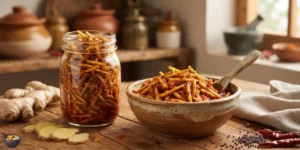
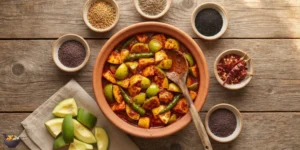
A traditional Pakistani achar delivers a tangy and spicy flavour with a sour and salty taste that builds as you chew. Think of fennel, nigella, fenugreek, mustard and red chilli working together. That is the style Achar Mart follows with its homemade-style range.
International pickles usually lean on vinegar, dill and sometimes sugar. They taste crisp and refreshing, which works well in burgers, sandwiches and salads. They are not designed to stand up to a spicy curry or a heavy biryani.
Our take: If you want depth, heat and a real desi punch, Achar Mart style pickles win. If you want a mild, crunchy topping for a sandwich, an imported dill pickle makes sense.
The Oil and Spice Base
This is a big difference most people never notice. Traditional achar is often prepared in mustard oil (sarson ka tel), which gives it that sharp, nutty aroma. Many imported pickles have no oil at all. They rely on brine or vinegar instead.
Oil-based achar coats every bite with flavour and carries the fat-soluble aroma of the spices. Brine-based pickles taste lighter and sharper. Neither is wrong, but they are not the same thing.
Texture
Imported dill pickles are known for their snap. Desi achar is usually softer and more rustic, with pieces of mango, lime, carrot or garlic that have absorbed the masala. A good achar should still hold its shape. If it turns into mush, the curing was probably rushed.
Quality Comparison: What Is Inside the Jar?
Taste gets you to buy once. Quality makes you buy again.
Ingredients and Preservatives
Read the label before you read the brand name. A quality pickle should list vegetables or fruit, oil or brine, salt and spices. Be careful when the label is long and full of unfamiliar additives.
Preservatives in pickle are not automatically bad. Salt, oil and vinegar are themselves natural preservatives. The concern is with unnecessary artificial colours and chemical enhancers that add nothing but shelf life and shine.
If you want to understand the science, our guide on why vinegar is used for pickling explains how acidity protects food and affects taste.
If you prefer a cleaner label, take a look at our guide to buying organic achar online in Pakistan.
The Curing and Fermentation Process
Good achar takes time. Mangoes are cut, salted and often dried in the sun before they meet the spices and oil. This fermentation and curing process is what produces the deep, rounded flavour you cannot fake.
Mass-produced pickles often work to a factory schedule, with faster processing and more standardised flavour. That is not always bad, because it gives consistency. But it rarely matches the character of a slow-cured, homemade-style batch.
Packaging
Glass jars protect flavour better than most plastics, and they do not react with acidic or oily contents. A sturdy glass jar with a tight lid and an intact seal is a good sign for any brand. Always check for leaks, bulging lids or cloudy brine when you buy.
Shelf Life and Storage
Pickles last a long time, but only if stored well. Always use a dry spoon, keep the oil level above the fruit, and store the jar away from direct sunlight. We cover all of this step by step in our guide on how to store achar for maximum freshness and shelf life.
Always check the best-before date on the jar, since shelf life changes with the recipe and the brand.
Brand-by-Brand: Achar Mart vs Shan, National, Mitchell’s and Heinz
You will often see people compare Achar Mart with big names. Here is how we think about each, without making claims about any competitor’s recipe. Always check the label on the jar in your hand.
Achar Mart vs Shan Pickle
Shan is a household name, especially for spice mixes, and it is widely available across supermarkets. It is a convenient, consistent choice. Achar Mart focuses on a homemade-style, small-batch feel and a wider range of traditional varieties, including less common ones like lasora and tenti.
Achar Mart vs National Pickle
National is another trusted supermarket brand with a long presence in Pakistani homes. It wins on availability. If you want something closer to what your grandmother might have made, with visible spices and a more rustic finish, a specialist like Achar Mart is worth trying.
Achar Mart vs Mitchell’s Pickle
Mitchell’s is well known for its jams, squashes and sauces and sits in the mainstream branded category. Compare labels, oil type and spice profile side by side. Sweet and mild tastes may lean one way, while bold desi heat leans another.
Achar Mart vs Heinz Pickle
Heinz is a global name, best known for ketchup, sauces and relishes. Its pickle-style products are made for the Western palate: mild, sweet or sharp, and designed for sandwiches and burgers. For classic Pakistani meals, this is simply a different kind of product.
Honest note: Every brand has its fans. The best test is to buy a small jar of each and taste them with the same meal.
Quick Comparison Table
| Feature | Achar Mart (Desi Style) | International / Mass-Market Brands |
|---|---|---|
| Flavour | Tangy, spicy, layered | Sharp, mild or sweet |
| Base | Oil and spice masala | Mostly vinegar and brine |
| Best With | Paratha, biryani, daal, karahi | Burgers, sandwiches, salads |
| Variety | Mango, lime, garlic, mixed, carrot, chilli and more | Mostly cucumber and relish |
| Style | Homemade-style, small batch | Factory-standardised |
| Authenticity | Strong desi character | Western-style |
| Availability | Online across Pakistan | Supermarkets and imports |
Price: Achar Mart vs Imported Pickles
Imported pickles often cost more because of shipping, duties and import margins. A small imported jar can cost significantly more per gram than a local achar of the same size.
Local brands, including Achar Mart, usually offer better value for money, especially when you are buying for a family that eats achar every day. Prices change, so check the current rates on our shop page before you order.
When comparing price, always check the weight, not just the jar size. A heavy glass jar can look big while holding less product than you think.
Homemade Achar vs Branded Pickle: Is There a Real Difference?
Yes, and it mostly comes down to control and character.
Homemade achar gives you full control over the oil, the salt and the spices. It is fresh, personal and often the best you will taste, but it takes time and practice. If you want to try it yourself, start with our recipes for crunchy mango pickle and spicy garlic pickle.
Branded pickle gives you convenience and consistency. You get the same taste each time without any work. The trade-off is that mass-market versions can taste more uniform.
Achar Mart sits in the middle. It is built for people who want the feel of home-prepared achar without spending days in the kitchen. Read more in our guide to authentic Pakistani pickles.
How to Check Pickle Quality at Home
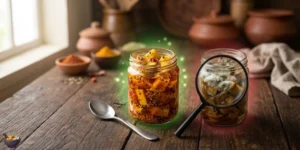
You do not need a lab to judge a jar. Try this simple five-step test:
- Look at the colour. Natural colours look slightly uneven. Very bright, uniform colour can hint at artificial colouring.
- Smell it. It should smell of spices and oil or vinegar, not of something stale or chemical.
- Check the oil or brine. It should be clear and not cloudy, with no bubbles or odd froth.
- Taste a small piece. The flavour should be balanced, with no harsh chemical aftertaste.
- Check the texture. Pieces should be firm enough to hold their shape and not slimy.
If a jar fails two or more of these, return it or skip that brand next time.
What Makes a Pickle “Authentic”?
People use the word “authentic” a lot, so here is a practical meaning. An authentic Pakistani achar usually has:
- Traditional spices such as fennel, nigella, fenugreek, mustard seeds and red chilli
- A regional recipe, such as Punjabi achar or Sindhi achar styles
- Slow curing or sun-drying instead of rushed processing
- Natural ingredients with a short label
- Flavour that tastes like home
You can explore this style in our authentic Pakistani achar online guide.
Which Achar Mart Pickles Should You Try First?
If you are new to the brand, start with these:
- Mango Pickle: The classic. Tangy, spicy and perfect with paratha. Not sure which mango style to pick? Read the best mango pickle in Pakistan buyer’s guide.
- Mix Pickle: The easiest all-rounder for family meals. Learn more in our traditional Pakistani mixed pickle guide.
- Garlic Pickle: Bold and punchy for garlic lovers.
- Lime Pickle: Sour, sharp and refreshing. Not sure between lime and mango? See our mango pickle vs lime pickle comparison.
- Green Chili Pickle: For people who like serious heat.
- Carrot Pickle: Mild, sweet-sour and crunchy.
You can see the full range in our online pickle guide for Pakistan.
Best Pairings: Which Pickle Goes With What?
The right pickle makes a meal better, and the wrong one fights it.
- Biryani and pulao: Mixed achar, lime pickle or carrot pickle
- Paratha and omelette: Mango pickle or garlic pickle
- Daal chawal: Lime pickle or green chilli pickle
- Karahi and nihari: Ginger pickle or mooli pickle
- Burgers and sandwiches: Imported dill or gherkin pickles
For more ideas, see our list of the 10 best Pakistani dishes to pair with achar.
Are Pickles Healthy? A Balanced View
Pickles are usually eaten in small amounts, and that is the key. Some contain beneficial ingredients, such as garlic, ginger and amla. But most are also high in salt and oil, so moderation matters, especially for people with high blood pressure.
For an honest look at both sides, read our article on whether achar is good or bad for health and the top 6 health benefits of pickles.
The same advice applies to imported pickles, which can also be very high in sodium. Check the nutrition label, eat a spoonful and not a bowl, and talk to your doctor if you have a medical condition.
The Verdict: Is Achar Mart Good?
So, is Achar Mart pickle worth buying? Here is our balanced summary:
Choose Achar Mart if you want:
- Authentic desi flavour with real spice character
- A homemade-style feel, with variety beyond basic mango and mixed
- Good value compared with imported jars
- Convenient online delivery across Pakistan
Choose an international brand if you want:
- A mild, crunchy topping for burgers and sandwiches
- A vinegar-based cucumber or gherkin pickle
- A familiar supermarket brand you can pick up in minutes
For Pakistani food, the winner for taste and authenticity is clear: a quality desi achar beats an imported pickle at the Pakistani dinner table. But the smartest answer is to keep both. Use desi achar with your curries and rice, and imported pickles with your sandwiches.
Please do not take any brand’s word for it, including ours. Read customer reviews, check the label and taste for yourself.
Conclusion
When you put Achar Mart vs international pickle brands side by side, the difference comes down to purpose. International brands excel at crisp, clean, mild pickles for Western-style food. Achar Mart excels at bold, tangy, spicy, homemade-style achar that belongs at a Pakistani table.
Whatever you choose, read the label, check the jar, and pick flavour that suits your meals. A good pickle should make every bite better, not just add salt.
Ready to Taste the Difference?
Explore our full range and find your favourite jar today.
👉 Shop Achar Mart Pickles Now
👉 Buy Pickles Online in Pakistan
👉 Discover Premium Desi Pickles
Frequently Asked Questions (FAQs)
1. Which pickle brand tastes best?
Taste is personal. For bold, tangy, spicy Pakistani flavour, a quality desi achar like Achar Mart usually tastes better with local food. For a mild, crunchy topping on sandwiches, many people prefer imported dill pickles.
2. Which is better, Pakistani achar or imported pickle?
For Pakistani dishes like biryani, paratha and daal, Pakistani achar is usually the better match. Imported pickles suit burgers, salads and sandwiches.
3. Is Achar Mart pickle worth buying?
If you want authentic, homemade-style desi flavour with good variety and value, it is worth trying. Read customer reviews and check the label so you can decide for yourself.
4. What makes a pickle authentic?
Traditional spices, a regional recipe, slow curing, natural ingredients and a flavour that tastes like home-prepared achar.
5. How do I check pickle quality at home?
Check the colour, smell, oil or brine clarity, texture and aftertaste. A good pickle smells fresh and spicy, looks natural and has no chemical aftertaste.
6. Are imported pickles better than desi achar?
Not necessarily. They are different products. Imported pickles are usually vinegar-based and mild, while desi achar is oil-based, spicy and layered.
7. Which achar has no preservatives?
Always read the label. Look for a short ingredient list and avoid artificial colours and unnecessary additives. Our organic achar guide can help.
8. How long does Achar Mart achar last?
Shelf life depends on the variety. Check the best-before date on your jar and follow our storage guide to keep it fresh.
9. Where can I buy authentic Pakistani achar online?
You can order from the Achar Mart shop with delivery across Pakistan.
10. What is the best achar for biryani and paratha?
Mixed achar, lime pickle and carrot pickle suit biryani, while mango and garlic pickle are a classic with paratha.