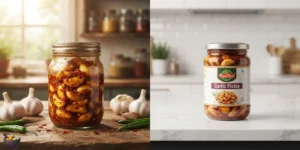
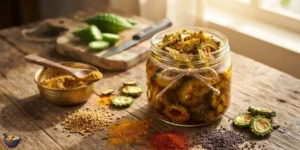
If you’ve ever stood in front of a pickle shelf wondering whether that jar is truly safe, or scooped a spoonful of your grandmother’s homemade achar without a second thought, you’re not alone. The debate around homemade vs commercial achar has been simmering in Pakistani kitchens for years, and it’s a question that deserves a real answer — not just tradition talking, or marketing talking, but facts talking.
Achar isn’t just a condiment in our culture. It’s comfort food, a nostalgia trigger, and honestly, sometimes the only thing that makes plain daal-chawal exciting. But as more commercial brands flood the market with mass-produced pickles, a genuine concern has emerged: are we trading taste and tradition for shelf life and convenience? And more importantly — which one should you actually trust with your health?
In this guide, we’ll break down everything from preservatives in achar to hygiene in achar production, so you can make an informed decision the next time you reach for a jar.
🏡 What Makes Homemade Achar Special?
There’s a reason homemade achar has survived generations without needing a marketing campaign. It’s rooted in trust, transparency, and control over every single ingredient that goes into the jar.
The Traditional Pickle Making Process
Homemade achar typically follows a slow, patient method passed down through families:
- Fresh vegetables or fruits are hand-selected and sun-dried
- Spices are freshly ground rather than pre-mixed
- Pure mustard oil pickle bases are used instead of refined or blended oils
- Natural fermentation is allowed to happen over days or weeks
- No artificial shortcuts are taken to speed up shelf life
This is essentially the same traditional pickle making process that has defined Pakistani and South Asian cuisine for centuries. You can read more about how deeply this tradition runs in our piece on the history of achar in Pakistani cuisine.
Homemade Achar Benefits You Can’t Ignore
When you make achar at home — or buy from a brand that follows homemade principles — you unlock several genuine advantages:
- Full ingredient control: You know exactly what’s going into the jar
- No hidden preservatives: Natural oil and salt act as the preservation method
- Better nutrient retention: Fermented food benefits like probiotics stay intact
- Customizable spice levels: You control the heat, tang, and texture
- Authentic taste: Nothing beats the depth of flavor from slow fermentation
If you’re curious about the science behind why this method works so well, our article on 5 reasons to start pickling at home dives deeper into the process.
🏭 The Reality of Commercial Achar
Now let’s flip the jar over — literally. Commercial achar has made pickle-eating incredibly convenient, but convenience often comes with trade-offs that aren’t always visible on the label.
Common Commercial Achar Risks
Mass production means brands need to prioritize shelf life, cost-efficiency, and uniform taste across batches. This often introduces:
- Artificial preservatives vs natural ingredients — many commercial pickles rely on chemical stabilizers instead of natural oil-based preservation
- Lower-grade oils — cheaper refined oils replace traditional mustard oil for cost-cutting
- Excessive sodium content in pickles — added to extend shelf life, but harmful in large quantities
- Artificial food coloring in pickles — used to make products look more vibrant and “fresh”
- Inconsistent hygiene standards — depending on the manufacturing facility
None of this means every commercial brand is bad. It simply means commercial achar risks are real enough that you need to check labels carefully and choose brands that prioritize transparency, something we discuss in our detailed guide on buying organic achar online in Pakistan.
Understanding Preservatives and Additives
Not all preservatives are dangerous — but not all are necessary either. Traditional achar naturally preserves itself using:
- High salt concentration
- Oil-based sealing (especially mustard oil)
- Vinegar or citric acid in some regional variations
Commercial products sometimes skip these natural methods in favor of packaged food additives that are cheaper and faster to produce at scale. This is where quality control in pickle manufacturing becomes the deciding factor between a trustworthy brand and a risky one.
⚖️ Homemade vs Commercial Achar: A Detailed Quality Comparison
Let’s put both side by side so the comparison is crystal clear.
| Factor | Homemade Achar | Commercial Achar |
|---|---|---|
| Ingredient transparency | Full control, no hidden items | Often unclear without label reading |
| Preservatives used | Natural (oil, salt) | Sometimes artificial/chemical |
| Oil quality | Pure mustard oil typically used | Varies — sometimes lower-grade oils |
| Shelf life | Shorter, but naturally preserved | Longer due to added preservatives |
| Hygiene standards | Depends on kitchen practices | Depends on brand’s manufacturing setup |
| Taste consistency | Varies batch to batch, authentic | Uniform but sometimes less authentic |
| Sodium levels | Controllable | Often higher for preservation |
| Convenience | Time-consuming | Ready to consume anytime |
This achar quality comparison shows that neither option is universally “better” — it depends heavily on who is making it and how they’re making it. A trustworthy commercial brand that follows homemade principles can actually outperform inconsistent homemade batches, and vice versa.
🩺 Is Homemade Achar Healthier Than Store-Bought?
This is the million-dollar question, and the honest answer is: it depends on the brand you’re comparing to — but generally, yes, homemade tends to have the edge.
Nutrition Facts Breakdown
Achar, when made traditionally, offers surprising achar nutrition facts:
- Rich in probiotics from natural fermentation
- Good source of antioxidants from spices like turmeric and fenugreek
- Digestive support due to fermented food benefits
- Healthy fats from cold-pressed mustard oil
For a deeper look at whether achar itself is good for your body, check out our full breakdown on is achar good or bad for health.
Sodium Content Concerns
One area where both homemade and commercial achar need caution is salt. However, commercial products often add extra sodium purely for preservation purposes — not flavor. If you’re managing blood pressure or watching sodium intake, this is a critical factor to check before purchasing.
Store-Bought Pickle Safety Checklist
Before buying any commercial jar, run through this quick checklist:
- ✅ Check the ingredient list for recognizable, natural items
- ✅ Look for mustard oil or cold-pressed oil as the base
- ✅ Avoid products with excessive artificial coloring
- ✅ Check manufacturing date and shelf life claims
- ✅ Prefer brands with visible hygiene certifications
Following this ensures better store-bought pickle safety regardless of which brand you choose.
🏆 How to Identify Trustworthy Achar Brands
Not all commercial achar is created equal. The market has genuinely good brands that follow homemade achar vs market achar principles by blending traditional methods with modern packaging convenience.
Here’s what separates trustworthy achar brands from the rest:
- They disclose full ingredient lists without vague terms like “spices” or “preservatives”
- They use natural mustard oil pickle bases instead of blended oils
- They follow strict hygiene protocols during production
- They avoid artificial coloring agents entirely
- They maintain consistent quality checks across batches
At AcharMart, we’ve built our entire process around these principles. Our 100% homemade ginger achar and authentic Pakistani achar range are made using traditional methods — no shortcuts, no artificial additives, just real ingredients prepared the way your grandmother would approve of.
🥇 Which Achar Is Better for Health? The Final Verdict
After weighing everything — ingredient transparency, preservation methods, nutritional value, and safety — here’s the honest conclusion:
Homemade achar (or homemade-style commercial achar) generally wins when it comes to health, simply because it relies on natural preservation and avoids unnecessary chemical additives.
However, not all commercial achar deserves distrust. Brands that replicate traditional methods, use pure mustard oil, and maintain transparent labeling can be just as safe — sometimes even more consistent in quality than inconsistent homemade batches.
The real answer to which achar is better for health isn’t “homemade always wins.” It’s: choose whichever option gives you full ingredient transparency and follows traditional preservation methods.
🍽️ Best Achar for Daily Use: Practical Recommendations
If you’re consuming achar regularly rather than occasionally, here’s how to choose smart:
- Rotate between different achar types like garlic pickle, mango pickle, and mixed pickle for varied nutritional benefits
- Portion control matters more than the type — even healthy achar is high in oil and salt
- Store properly to maintain freshness; our guide on how to store achar for maximum freshness covers this in detail
- Pair achar with balanced meals rather than eating it as a standalone snack
- If health-conscious, opt for options with visible reduced sodium or organic labeling
For daily consumption, brands offering organic achar online in Pakistan tend to strike the best balance between convenience and health-conscious ingredients.
🎯 Conclusion: Trust the Process, Not Just the Label
The homemade vs commercial achar debate isn’t really about picking a permanent winner — it’s about understanding what goes into your food and making conscious choices based on that knowledge. Homemade achar earns trust through transparency and tradition, while commercial achar earns it through quality control, hygiene standards, and ingredient honesty.
The smartest approach? Don’t just trust a label because it says “homemade” or “premium.” Look at the ingredients. Check for preservatives. Ask questions. And whenever possible, choose brands that treat achar-making as a craft, not just a product line.
Ready to taste the difference for yourself? Explore AcharMart’s full range of authentic, homemade-style pickles and experience achar the way it was always meant to taste — pure, traditional, and genuinely trustworthy.
❓ Frequently Asked Questions
Q1: Is homemade achar always healthier than commercial achar? Not always. Homemade achar tends to be healthier because it avoids artificial preservatives, but well-made commercial achar that follows traditional methods can be equally nutritious and safe.
Q2: What are the biggest commercial achar risks to watch out for? The main risks include artificial preservatives, low-grade oils, excessive sodium content, and artificial food coloring used to extend shelf life or enhance appearance.
Q3: How long does homemade achar typically last compared to store-bought? Homemade achar usually lasts several months to a year when stored properly with adequate oil and salt, while commercial achar often has a longer shelf life due to added preservatives.
Q4: What should I check before buying commercial pickle for store-bought pickle safety? Always check the ingredient list, manufacturing date, oil type used, and avoid products with vague preservative labeling or excessive artificial coloring.
Q5: Which type of achar is best for daily consumption? Achar made with pure mustard oil, natural fermentation, and minimal sodium is ideal for daily use. Rotating between different varieties also helps balance nutrition.
Q6: Are trustworthy achar brands in Pakistan easy to find? Yes, brands that prioritize transparency, traditional methods, and hygiene standards — like AcharMart — are increasingly available and clearly label their ingredients for consumer trust.